
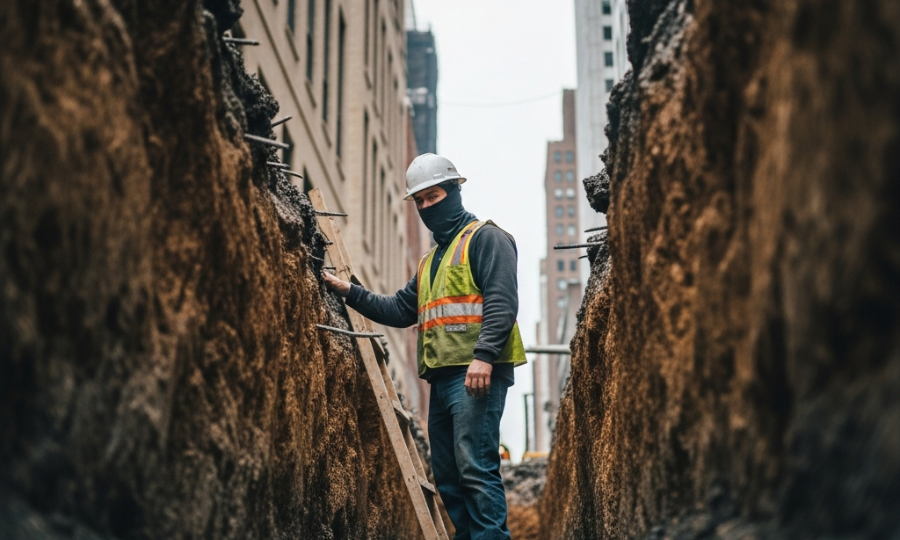
The Silent Threat Beneath Our Feet: Trench Collapses in the Bronx
Trench collapses represent one of the most catastrophic construction site accidents in the Bronx. These incidents often result in severe injuries or fatalities for workers involved. Our Bronx personal injury lawyers have decades of experience helping accident victims navigate these complex legal challenges. We understand the profound impact a trench collapse has on families and livelihoods.
Key Takeaways
- OSHA mandates protective systems for all trenches 5 feet or deeper, yet violations are common across NYC construction sites.
- Trench collapses often result in crush injuries, spinal damage, or fatalities due to the immense force of tons of collapsing soil.
- Victims of trench collapses can pursue third-party liability claims beyond workers’ compensation for full recovery of medical expenses and lost wages.
- Proper soil analysis and daily inspections by a competent person are crucial; ignoring these steps increases collapse risk by over 70% in unstable soil conditions.
A trench collapse occurs when the walls of an excavation suddenly give way. This terrifying event buries workers under tons of soil and debris. Survival rates are tragically low in these situations. Even survivors face life-altering injuries, including crush injuries, asphyxiation, and permanent disabilities. The sheer force of collapsing earth is immense and unforgiving.
Understanding the Core Causes of Trench Failures
Many trench collapses stem directly from preventable factors. Inadequate protective systems constitute a major cause. Also, unstable soil conditions and negligent excavation practices significantly contribute to these dangers. External environmental factors also play a critical role. Understanding these elements is essential for preventing future tragedies.
Inadequate Shoring and Protective Systems
OSHA mandates that all trenches five feet or deeper require protective measures. These systems prevent soil from caving in. Common protective systems include shoring, sloping, and trench boxes. Shoring involves installing supports like hydraulic jacks or timber to brace trench walls. Sloping involves cutting back the trench walls to a safe, stable angle. Trench boxes are steel or aluminum structures placed within the trench to protect workers inside.
Contractors sometimes ignore these critical safety standards. They might cut corners to save time or money on projects. This negligence puts workers’ lives at grave risk. For example, a recent NYC Department of Buildings report highlighted numerous violations for inadequate shoring on local Bronx construction sites. Such disregard for safety protocols has devastating consequences.
A “competent person” must oversee all excavation work. This individual identifies existing and predictable hazards. They also possess the authority to take prompt corrective measures. Unfortunately, many sites lack proper supervision. This absence of oversight allows dangerous conditions to persist unchecked.
The Peril of Unstable Bronx Soil
The type and condition of soil significantly impact trench stability. Bronx soil compositions vary widely across neighborhoods. Sandy soil, common in some areas, is highly unstable and prone to collapse without proper shoring. Clay soil can appear stable but becomes dangerously unstable when wet. Loam offers better stability but still requires appropriate protection.
Water saturation from rain or groundwater further weakens trench walls. Heavy rainfall can quickly turn a stable trench into a deathtrap. Also, freezing and thawing cycles loosen soil structure over time. This makes a seemingly stable trench suddenly hazardous. Proper soil analysis is therefore crucial before any excavation begins. This analysis informs the choice of protective system.
External Factors Increasing Collapse Risk
Vibrations from nearby traffic or heavy machinery destabilize trench walls. Construction sites often operate near busy Bronx roads. The constant rumble of trucks and buses can loosen soil particles over time. Similarly, demolition work or pile driving nearby creates significant ground vibrations. These external forces contribute to unexpected collapses.
Plus, heavy equipment moving too close to the trench edge increases pressure on the walls. This added weight significantly raises the risk of a cave-in. Safety protocols must account for these environmental factors. Workers must maintain safe distances from trench edges. Also, equipment operators require clear guidelines.
Negligent Excavation Practices
Improper excavation techniques directly lead to trench failures. Workers must understand the correct procedures for trenching. For instance, digging too steeply for the soil type is a common mistake. This creates an inherently unstable wall. Also, failing to clear spoil piles away from the trench edge creates dangerous loads.
OSHA requires spoil piles to be at least two feet back from the excavation. This prevents soil and rocks from falling back into the trench. Ignoring these fundamental safety rules jeopardizes everyone on site. Also, workers need safe means of egress and ingress. Ladders or ramps must be readily available. These are essential for rapid escape in an emergency. Proper training and adherence to best practices are therefore essential for every project.
The Devastating Human Cost of Collapses
Trench collapses inflict catastrophic injuries on workers. Common injuries include broken bones, severe crush injuries, and internal organ damage. Many victims suffer from spinal cord injuries, leading to paralysis. Traumatic brain injuries also occur due to impact or lack of oxygen during burial. Sadly, many trench collapses prove fatal. Families are left grieving and facing immense financial burdens. These incidents shatter lives permanently.
Our injury attorneys in the Bronx handle car, construction, and slip-and-fall cases, including the most severe trench collapse incidents. We witness the profound suffering firsthand. Survivors often face a lifetime of medical complications. Rehabilitation can last for years. Many cannot return to their previous work. This loss of income adds to the financial strain.
Also, the psychological trauma is immense. Victims often suffer from PTSD, anxiety, and depression. These mental health challenges require ongoing support. A trench collapse is not just a physical injury; it is a life-altering event. Victims deserve comprehensive care and compensation. We fight to secure resources for their long-term recovery.
OSHA’s Strict Standards for Trench Safety
The Occupational Safety and Health Administration (OSHA) sets strict standards for excavation work. OSHA’s 1926 Subpart P outlines these detailed requirements. Employers must provide a safe work environment for all personnel. This includes implementing protective systems for trenches five feet or deeper. Plus, employers must ensure a competent person is always on site. This person must conduct daily inspections before work begins. They also perform inspections after any event that could increase hazards, such as a heavy rainstorm.
OSHA regulations aim to prevent these tragedies through proactive measures. For instance, OSHA’s “Focus Four” hazards identify the leading causes of fatalities in construction. Excavation and trenching is a critical component of this initiative. Violations can lead to hefty fines and legal action against negligent parties. Adhering to these rules is not optional; it is mandatory for every construction project. These standards protect lives.
Legal Avenues for Trench Collapse Victims
Victims of trench collapses often have multiple legal options. Workers’ compensation provides immediate medical benefits and lost wages. However, workers’ comp benefits are often limited. They do not cover pain and suffering. Also, they do not hold negligent parties fully accountable for their actions. Many cases involve third-party liability claims. This means pursuing compensation from entities other than the direct employer.
Examples include negligent general contractors, subcontractors, equipment manufacturers, or property owners. A skilled legal team identifies all responsible parties. They then build a strong case for maximum compensation. This includes current and future medical expenses, lost wages, pain and suffering, and costs for long-term care. We ensure victims receive full and fair redress.
Building a Strong Case After a Collapse
Gathering comprehensive evidence is critical in trench collapse cases. This includes official incident reports, detailed witness statements, and safety logs. Also, photographs and videos of the site before and after the collapse are invaluable. Expert testimony from civil engineers and safety specialists strengthens the claim significantly. These experts can reconstruct the accident. They can also identify specific safety violations.
Our firm meticulously investigates every detail of your case. We work tirelessly to uncover all facts. This thorough approach is essential for achieving justice. We ensure that our clients’ voices are heard throughout the legal process. We fight aggressively for their rights and future well-being. Our dedicated team prepares every case as if it will go to trial. This preparation often leads to favorable settlements.
Protecting Bronx Workers: A Shared Responsibility
Preventing trench collapses requires collective effort from everyone involved. Employers must prioritize safety over speed and cost savings. This commitment starts from the top. Workers must receive thorough training on excavation hazards. They must also understand and follow all proper safety protocols. Regular safety briefings reinforce best practices and keep awareness high. Also, adequate resources for protective systems are non-negotiable. These include high-quality shoring materials and trench boxes.
The NYC Department of Buildings frequently issues safety alerts regarding trenching. These alerts emphasize the importance of strict adherence to safety guidelines. Everyone on a construction site shares responsibility for safety. A commitment to vigilance saves lives and prevents devastating injuries. We advocate for stronger enforcement of safety regulations. We also support initiatives that educate workers and employers on best practices.
Seeking Justice After a Trench Collapse Injury
Trench collapses are preventable tragedies. They demand serious attention from everyone in the construction industry. When they occur, victims and their families face unimaginable challenges. If you or a loved one suffered injury in a trench collapse, you need experienced legal representation. Our firm stands ready to help you. If you need an experienced Bronx accident lawyer, our firm is ready to fight for you. We provide compassionate, assertive advocacy. Contact us today for a free, confidential consultation. We protect your rights and seek the justice you deserve.
Related Reading
Frequently Asked Questions
What are the most common causes of trench collapses in construction?
The primary causes include inadequate shoring or protective systems, unstable soil conditions, and negligent excavation practices. OSHA identifies these as critical hazards, especially for trenches 5 feet deep or more.
What kind of injuries do workers suffer in a trench collapse?
Workers commonly sustain severe injuries like broken bones, crush injuries, internal organ damage, spinal cord injuries, and traumatic brain injuries. Fatalities are unfortunately frequent due to asphyxiation or massive trauma from tons of soil.
Can I sue if I’m injured in a trench collapse in the Bronx, even if I receive Workers’ Comp?
Yes, you can often pursue third-party liability claims against other negligent parties, such as general contractors or equipment manufacturers, beyond Workers’ Compensation. These claims seek compensation for pain, suffering, and full economic losses not covered by workers’ comp.
What specific OSHA regulations apply to trenching and excavation?
OSHA’s 1926 Subpart P outlines detailed requirements for excavation, including mandatory protective systems for trenches 5 feet or deeper, daily inspections by a competent person, and safe spoil pile distances of at least two feet from the trench edge.
This article was drafted with AI assistance. Please verify all claims and information for accuracy. The content is for informational purposes only and does not constitute professional advice.
Free Consultation
We want to hear about your case! Fill in the form to speak to a Bronx personal injury attorney now!
Follow us for legal tips and case results:
