
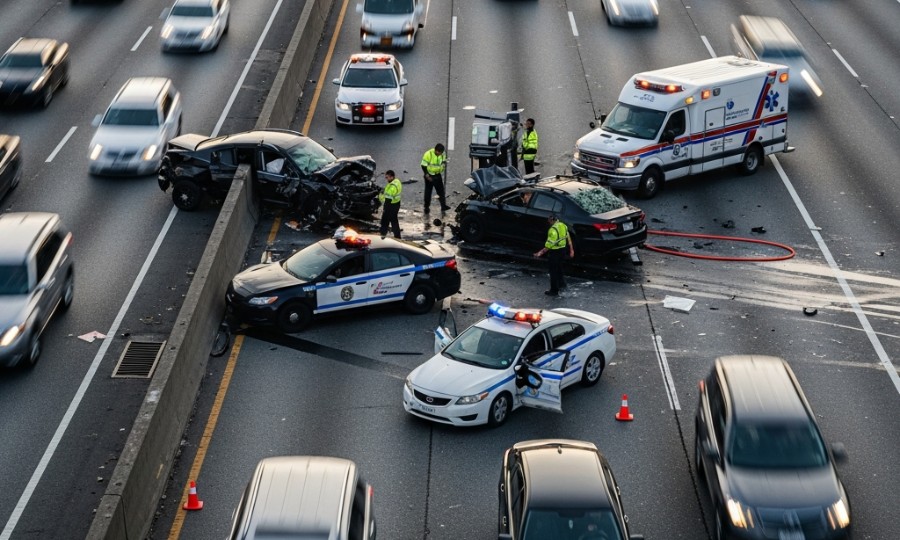
Imagine you’re driving on the Cross Bronx Expressway, a notorious stretch of road in New York City, known for its heavy traffic and frequent incidents. One moment, you’re navigating the lanes, and the next, there’s a sudden jolt, the screech of tires, and the undeniable impact of a car crash. Your heart pounds; adrenaline surges. It’s a terrifying experience, and in that immediate aftermath, knowing exactly what to do can feel impossible. But here’s the thing: those first few minutes and hours are absolutely critical, not just for your safety, but for protecting your future legal and financial well-being. So, what steps should you take immediately following a car accident on the Cross Bronx?
Prioritizing Safety and Well-being Amidst the Chaos
Your immediate safety and the safety of others must be your top priority after a Cross Bronx Expressway crash. The sheer volume of traffic and the speeds involved mean that staying in harm’s way is a significant risk. If your vehicle is still operational and you can safely move it, get to the shoulder or a nearby safe location. Turn on your hazard lights right away. If moving your car isn’t possible or safe, stay in your vehicle with your seatbelt fastened, and wait for emergency services to arrive. Don’t, under any circumstances, stand in active traffic lanes; it’s just too dangerous.
Once you’re in a relatively safe spot, check yourself and your passengers for injuries. Even if you feel okay, look for any visible signs of trauma. Ask everyone if they’re experiencing pain or discomfort. Remember, some injuries, like whiplash or internal bleeding, might not present symptoms immediately, so a thorough check is always wise. Then, without delay, call 911. Explain your location (be as specific as possible, referencing mile markers or exits if you can), the number of vehicles involved, and if there are any apparent injuries. The police will respond to serious accidents or those involving injuries, and paramedics will be dispatched if medical attention is needed. You’ll want a police report, trust me (more on that later).
Documenting the Scene: Your Critical Evidence Collection
After ensuring safety and alerting emergency services, your next crucial step is to gather as much information and evidence as possible from the scene of the Cross Bronx accident. This isn’t just about curiosity; it’s about building a strong foundation for any potential insurance claims or legal actions you might need to pursue. Think of yourself as a detective for a few moments.
What to Photograph (and Why It Matters)
In today’s world, nearly everyone has a smartphone, and it’s your best friend for documenting the crash scene. Take a wide range of photos and videos. What should you focus on? Start with overall shots of the accident scene, showing the position of all vehicles involved. Then, zoom in. Get close-ups of vehicle damage – your car, the other car(s), and any other property damage (like guardrails or street signs). Photograph skid marks on the road, debris, and any broken glass. Don’t forget to capture the weather conditions, road conditions (potholes, ice, standing water), and traffic signs or signals at the intersection. You should also photograph any visible injuries on yourself or your passengers. The more visual evidence you have, the better. These images can be invaluable later on, helping to establish fault and the extent of the damage, which can sometimes be difficult to prove through words alone.
Beyond photos, exchange information with everyone involved. This includes names, contact numbers, insurance company names, and policy numbers for all drivers. Also, get the license plate numbers, vehicle make, model, and year for every car. If there are witnesses, ask for their contact information too. Independent witnesses can often provide unbiased accounts that significantly strengthen your case. You might wonder, “Do I really need all of this?” The truth is, the more detailed your records are, the less room there is for disputes or misunderstandings down the line.
Reporting the Accident: Navigating the Authorities
Once the police arrive, they’ll typically investigate the scene and create an official accident report. This police report is an incredibly important document. It will often include details like the date, time, and location of the crash, the parties involved, a diagram of the accident, and sometimes, the investigating officer’s determination of fault. Make sure you know which police department responded (e.g., NYPD) and how to obtain a copy of the report. In New York State, if an accident results in death, personal injury, or property damage exceeding $1,000, you’re generally required to file a report with the Department of Motor Vehicles (DMV) within 10 days. This isn’t just a suggestion; it’s a legal requirement, and failing to do so can have consequences for your driving privileges.
When speaking with the police, be truthful and provide the facts as you remember them. However, it’s usually best to avoid making speculative statements or admitting fault. Stick to what you know happened. This isn’t about being evasive; it’s about not inadvertently saying something that could be misconstrued or used against you later when you might not have all the facts straight in the immediate shock of the moment. We’re often not thinking clearly right after an accident, are we?
Protecting Your Rights: What to Say (and Not Say)
This point can’t be stressed enough: be extremely careful about what you say at the scene and in the days following the Cross Bronx Expressway crash. While it’s natural to apologize out of politeness or shock, saying “I’m sorry” could be interpreted as an admission of fault, even if you weren’t actually to blame. Similarly, avoid discussing the details of the accident with the other driver’s insurance company without first consulting with your own insurer or, ideally, a legal professional. Insurance adjusters are trained to gather information that may benefit their client, not necessarily yours. You might be thinking, “But I just want to be helpful!” And that’s commendable, but your priority here is to protect your rights and interests.
When you report the accident to your own insurance company, provide them with all the facts and documentation you’ve collected. Be honest and thorough. They’re there to help you navigate your claim. However, if the other party’s insurance company contacts you, politely decline to give a recorded statement or discuss fault. Simply state that you’re in contact with your attorney or your own insurance provider and they will handle all communications. It’s a professional way to protect yourself from potential missteps.
Seeking Medical Attention: Don’t Delay Even ‘Minor’ Symptoms
Even if you feel fine immediately after a Cross Bronx accident, it is absolutely crucial to seek medical attention. Many serious injuries, as we touched on earlier, have delayed symptoms. Whiplash, concussions, soft tissue injuries, and even internal trauma might not manifest for hours or even days after the impact. A medical professional can properly assess your condition, diagnose any hidden injuries, and create a record of your visit. This medical documentation is incredibly important if you need to pursue a personal injury claim later on. Without it, it becomes much harder to prove that your injuries were directly caused by the accident.
Think about it: if you wait weeks to see a doctor and then claim a neck injury from the crash, the defense might argue that something else caused your pain. An immediate visit (or at least within a day or two) establishes a clear link. Follow all medical advice, attend follow-up appointments, and keep meticulous records of all your treatments, prescriptions, and any out-of-pocket expenses. This isn’t just about getting better; it’s about building a comprehensive record of your recovery journey, which will be vital for your case.
The Path Forward: Consulting Legal Expertise
Dealing with the aftermath of a Cross Bronx Expressway crash can be overwhelming. There are police reports, insurance adjusters, medical appointments, and potentially lost wages to consider. This is precisely why consulting with an experienced personal injury attorney is often the wisest next step. A good attorney can help you understand your rights, navigate the complex legal landscape (especially in New York, with its unique “no-fault” insurance laws), and ensure you receive fair compensation for your injuries, medical bills, lost income, and pain and suffering.
They can also handle all communications with insurance companies, gather additional evidence, interview witnesses, and file necessary paperwork, taking a significant burden off your shoulders during what’s undoubtedly a stressful time. I believe that having a professional advocate on your side allows you to focus on what truly matters: your recovery. Don’t you deserve peace of mind during this difficult period? While you might think you can handle everything yourself, the intricacies of personal injury law and the tactics insurance companies employ often require professional guidance. Taking these immediate steps after a Cross Bronx accident isn’t just about reacting; it’s about proactively protecting yourself and your future. By being prepared and knowing what to do, you can turn a chaotic moment into a manageable situation with the best possible outcome.
This article was drafted with AI assistance. Please verify all claims and information for accuracy. The content is for informational purposes only and does not constitute professional advice.
Free Consultation
We want to hear about your case! Fill in the form to speak to a Bronx personal injury attorney now!
Follow us for legal tips and case results:
