
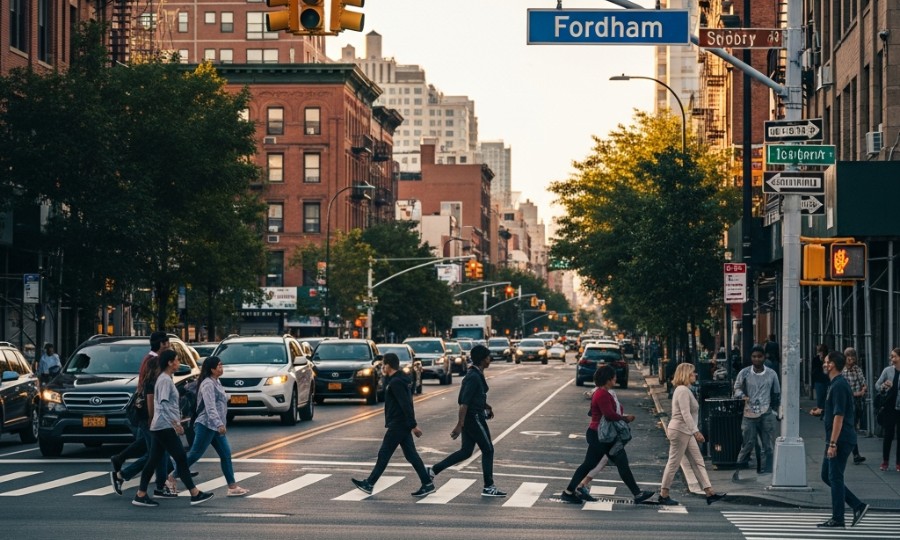
Have you ever walked along Fordham Road, navigating its bustling sidewalks and busy intersections, and felt a flicker of concern for your safety? It’s a feeling many of us share. Fordham Road isn’t just a vital artery for commerce and transit in the Bronx; it’s also, regrettably, a corridor with a documented history of pedestrian incidents. For those who live, work, or shop in the area, understanding these dangers isn’t just academic—it’s essential for daily life.
Recent data and community observations paint a clear picture: Fordham Road continues to be a high-risk zone for pedestrians. We’re not just talking about minor fender benders here; we’re talking about serious collisions that have life-altering consequences. This isn’t about fear-mongering; it’s about shedding light on critical safety concerns and empowering you with knowledge.
Understanding Fordham Road’s Pedestrian Challenges
Why does a major thoroughfare like Fordham Road continue to pose such significant risks to those on foot? The answer is complex, a confluence of factors that create a challenging environment. Firstly, you’ve got the sheer volume of activity. Fordham Road is a commercial hub, drawing thousands of shoppers, commuters, and residents daily. This means a constant flow of pedestrians, often crossing at various points, sometimes against signals or outside designated crosswalks (a common problem, sadly, driven by convenience or perceived urgency).
Then there’s the traffic. Multiple bus lines, personal vehicles, and delivery trucks constantly traverse the road, often moving at speeds that, while perhaps within the legal limit, feel too fast for such a densely populated area. The width of the road itself at many points can make crossing feel like a marathon, increasing a pedestrian’s exposure time to moving vehicles. And let’s not forget the infrastructure; while improvements have been made, some intersections remain complicated, lacking clear sightlines or sufficient pedestrian-only crossing times.
High-Risk Intersections: Where Danger Lurks
While the entire stretch of Fordham Road demands vigilance, certain intersections consistently stand out as particularly perilous. These aren’t just random spots; they’re areas where the design, traffic patterns, and pedestrian behavior often collide in dangerous ways. Based on NYPD accident data and observations from community safety advocates, intersections like Fordham Road and the Grand Concourse, Fordham Road and Webster Avenue, and the busy junction at Fordham Road, Third Avenue, and Washington Avenue are frequently cited as hot spots.
Consider the intersection of Fordham Road and Grand Concourse. It’s a massive, multi-lane crossing where vehicles are turning in several directions, often trying to beat the light or navigate complex merges. Pedestrians, sometimes rushing for a bus or simply trying to get across quickly, can find themselves in the path of a turning car whose driver might be focused on oncoming traffic rather than the crosswalk. It’s a recipe for disaster, and we’ve seen too many instances where this scenario has played out tragically.
Similarly, the area around Fordham Road and Webster Avenue presents its own unique challenges. Here, you have significant bus traffic intersecting with regular vehicular flow and heavy foot traffic from nearby businesses and the Metro-North station. The sheer volume can be overwhelming, and drivers, perhaps frustrated by congestion, might make impatient maneuvers, while pedestrians, sometimes thinking a quick dash is safe, put themselves at risk. I’ve personally witnessed several close calls here, and it’s always a sobering reminder of how quickly things can go wrong.
The Data Speaks: Recent Incidents and Official Responses
Official reports from the New York City Department of Transportation (NYC DOT) and NYPD accident statistics consistently highlight Fordham Road as a corridor requiring intensive safety interventions. While exact real-time numbers can fluctuate, the trend has been clear: pedestrian-involved collisions are a persistent issue. These aren’t just abstract figures; they represent real people, real injuries, and real heartache for families in our community. For instance, Vision Zero data often shows a disproportionate number of severe injuries and fatalities occurring on major arterial roads like Fordham, reinforcing its “priority corridor” status.
In response, city agencies have implemented various measures under the Vision Zero initiative, which aims to eliminate traffic fatalities and serious injuries. These have included targeted enforcement by the NYPD (focusing on speeding and failure to yield), engineering improvements like leading pedestrian intervals (giving pedestrians a head start before vehicles get a green light), and sometimes even curb extensions to shorten crossing distances. But are current safety measures truly enough, or do we need a bolder, more comprehensive approach to protect our neighbors?
A Closer Look: Common Accident Scenarios
- The “Right-on-Red” Dilemma (or Impatient Turns): Even where right-on-red is prohibited or when drivers simply don’t yield, a common scenario involves a vehicle making a right turn while a pedestrian is legally crossing. The driver might be looking left for a gap in traffic, completely missing the person in the crosswalk to their right. It’s a moment of inattention that can have devastating consequences, especially at intersections with high turning volumes.
- Distracted Pedestrians and Drivers: This is a growing concern everywhere, and Fordham Road is no exception. A pedestrian engrossed in their phone, not looking up before stepping off the curb, can walk directly into the path of a vehicle. Conversely, a driver checking their GPS or texting (which, let’s be clear, is illegal and incredibly dangerous) might not see a pedestrian who has the right-of-way. Both sides have a responsibility here, and when either fails, the results can be tragic.
- Visibility Issues and Darker Hours: During evening hours or in adverse weather conditions, visibility becomes a major factor. Drivers might struggle to see pedestrians, especially if they’re wearing dark clothing or crossing outside of well-lit areas. Pedestrians, in turn, might misjudge the speed or distance of oncoming vehicles. This is where personal vigilance becomes even more critical for everyone involved.
What’s Being Done? Community Efforts and City Initiatives
It’s not all doom and gloom. There are dedicated individuals and organizations actively working to make Fordham Road safer. Community boards, local elected officials, and advocacy groups like Transportation Alternatives have been instrumental in pushing for change. They’re gathering feedback from residents, lobbying for specific infrastructure improvements, and raising awareness about safe street practices. Their tireless efforts are a testament to the community’s commitment to tackling this issue head-on.
The NYC DOT continues to study high-crash corridors like Fordham Road, often proposing and implementing targeted safety enhancements. These can range from re-timing traffic signals to give pedestrians more time, to installing speed cameras to deter dangerous driving, to painting highly visible crosswalks and adding pedestrian refuge islands where feasible. While progress can sometimes feel slow (it’s a massive undertaking, after all), these incremental changes, often driven by data and community input, are vital steps toward a safer environment.
Your Safety Matters: Practical Tips for Pedestrians and Drivers
Ultimately, while city agencies and community groups play a crucial role, individual actions are powerful. What can you do to contribute to a safer Fordham Road? We all share the streets, and we all have a part to play.
For Pedestrians:
- Stay Alert and Aware: Put away your phone. Remove your headphones. Look both ways, and then look again. Make eye contact with drivers before crossing, if possible.
- Cross Legally: Always use marked crosswalks and obey pedestrian signals. Don’t assume a driver sees you just because you’re in the crosswalk.
- Be Visible: Especially at night, wear bright clothing or use reflective gear. Carry a flashlight if you’re walking in poorly lit areas.
- Anticipate: Don’t assume drivers will stop. Be prepared for unexpected turns or movements, even if you have the right-of-way.
For Drivers:
- Slow Down: Speeding significantly increases the severity of collisions. Adhere to posted speed limits, especially in areas with high pedestrian traffic.
- Yield to Pedestrians: Always yield to pedestrians in crosswalks. Be extra cautious when making turns, and check for pedestrians before, during, and after your turn.
- Eliminate Distractions: Put your phone away. Don’t text or talk on the phone while driving. Even a momentary lapse of attention can have devastating consequences.
- Be Patient: Fordham Road is busy. Expect delays, and don’t let frustration lead to risky driving maneuvers.
The truth is, creating a truly safe Fordham Road is a shared responsibility. It requires ongoing investment in infrastructure, consistent enforcement, and a collective commitment from every pedestrian and driver. We know this feels overwhelming at times, especially when you’re just trying to get from point A to point B. But by understanding the risks and adopting safer practices, we can all contribute to a more secure environment. Let’s work together to make Fordham Road not just a vibrant commercial strip, but a safe one too.
This article was drafted with AI assistance. Please verify all claims and information for accuracy. The content is for informational purposes only and does not constitute professional advice.
Free Consultation
We want to hear about your case! Fill in the form to speak to a Bronx personal injury attorney now!
Follow us for legal tips and case results:
