
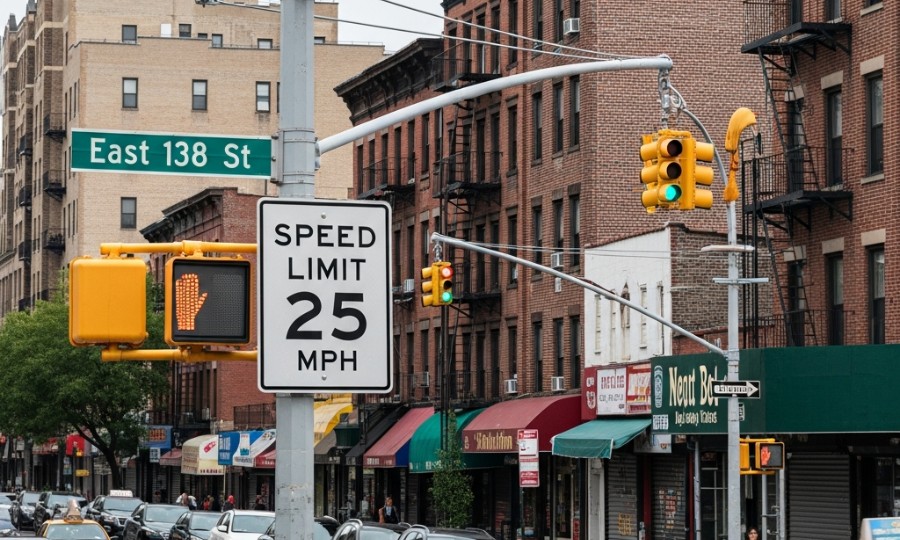
Ever found yourself rushing through a familiar street, only to suddenly notice new signage? You’re not alone. Our bustling city streets are constantly evolving, and right now, a significant shift is underway that will impact how we all navigate the Bronx. The New York City Department of Transportation (NYC DOT) is implementing speed limit reductions across 250 locations citywide by December 31, 2025, with a particular focus on priority streets right here in the Bronx. This isn’t just about slowing down; it’s about creating safer spaces for everyone.
We know this feels like another change to keep track of, but understanding these updates isn’t just crucial for avoiding a ticket – it’s vital for protecting lives. These initiatives are a cornerstone of Vision Zero, the city’s commitment to eliminating traffic fatalities and serious injuries. So, what exactly does this mean for your daily commute, your evening stroll, or even just a quick trip to the grocery store?
Understanding the ‘Why’ Behind Lower Speed Limits
It’s easy to feel frustrated when you see a speed limit drop, especially on a road you’ve driven countless times. But, here’s the thing: these decisions aren’t arbitrary. They’re rooted in extensive data and a clear understanding of physics. Vision Zero, a global initiative adopted by New York City, operates on a fundamental principle: traffic crashes are preventable, and human life is paramount. When we talk about reducing speed limits, we’re directly addressing one of the most critical factors in accident severity.
Think about it: even a small reduction in speed can dramatically increase a pedestrian’s chance of survival if struck. According to the AAA Foundation for Traffic Safety, the average risk of severe injury or death for a pedestrian struck by a vehicle traveling at 20 mph is 10%. That number jumps to 40% at 30 mph, and a staggering 80% at 40 mph. Those numbers aren’t just statistics; they represent real people, real families. So, when the NYC DOT targets 250 locations for these reductions, they’re strategically identifying areas where slowing down will have the most significant impact on preventing tragedy.
The Bronx: A Focus on Priority Streets
You might be wondering why the Bronx is receiving such focused attention in this citywide effort. The truth is, some areas have historically experienced a higher incidence of traffic-related injuries and fatalities. These ‘priority streets’ often include bustling commercial corridors, residential areas near schools, and major thoroughfares that see a mix of vehicle, pedestrian, and cyclist traffic. For instance, sections of Grand Concourse, Fordham Road, or even smaller, busy streets like Southern Boulevard have been identified as zones where a few miles per hour can make a world of difference.
The goal isn’t to impede traffic flow unnecessarily, but to recalibrate our expectations for speed in environments where people are frequently sharing the road. This isn’t just about drivers; it’s about creating a more harmonious and safer ecosystem for everyone who uses our streets. You’ll likely see new signage pop up, not just on the main drags, but also on connector streets and residential blocks that feed into these larger areas, creating a more consistent and predictable speed environment.
What These Changes Mean for You, the Driver
Let’s be pragmatic. As a driver, new speed limits in the Bronx will require a conscious adjustment. You might find yourself planning an extra few minutes for your commute, especially if your route includes several of these newly designated zones. It’s a small trade-off, really, when you consider the potential benefits. Adapting means more than just watching your speedometer; it means staying more alert, anticipating stops, and being more aware of your surroundings.
For example, if you regularly drive down a stretch of Webster Avenue that now has a reduced speed limit, you’ll need to adjust your driving habits to match. It’s not just about avoiding a ticket (though that’s a good motivator!); it’s about internalizing that this lower speed is the new safe standard for that specific environment. Navigation apps are usually quick to update, but the most reliable method remains paying close attention to posted signs. Do you typically rely on muscle memory for your routes? Now’s the time to re-engage with your environment.
Beyond Drivers: Benefits for Pedestrians and Cyclists
While drivers are the ones directly adjusting their speeds, the ripple effect of these changes extends far beyond the windshield. For pedestrians and cyclists in the Bronx, these lower limits translate directly into a greater sense of security and significantly improved safety. Imagine a parent walking their child to school on a street where cars are now traveling 5-10 mph slower. That increased reaction time for drivers, coupled with less severe impact forces, drastically reduces the risk of a catastrophic outcome.
For instance, a cyclist navigating a busy street in Mott Haven can feel more confident knowing that vehicles are moving at a more controlled pace, allowing more time for evasive action for both parties if an unexpected situation arises. We’ve all seen close calls, haven’t we? These reductions aim to minimize those heart-stopping moments. It’s about empowering vulnerable road users to share our streets with less fear, fostering a more inclusive and accessible urban environment for everyone.
Navigating the New Norm: Tips for Adapting
So, how do you smoothly transition to these new speed limits in the Bronx? First, let’s look at the practical steps you can take, and then we’ll explore the mindset shift. My primary advice is always to stay informed. Pay close attention to signage – the NYC DOT is actively installing new signs, and they are your most direct source of information. Next, leverage technology; most modern navigation apps incorporate real-time speed limit data, which can be incredibly helpful for unfamiliar routes or newly updated areas.
Consider planning a few extra minutes for your trips through the Bronx, at least initially, until these new speeds become second nature. For delivery drivers or those with tight schedules, this planning is even more critical. I believe that integrating these new habits into your routine will quickly become seamless. Think of it like this: if you’re driving through a residential area near a park, you’re usually more cautious, right? Extend that same thoughtful approach to these newly designated streets.
The Bigger Picture: A Safer NYC for Everyone
Ultimately, these speed limit reductions in the Bronx are part of a larger, ongoing effort to transform New York City’s streets into safer spaces for everyone. It’s an investment in our collective well-being, acknowledging that while speed can be convenient, safety is paramount. We know that adapting to change can sometimes feel challenging, but the potential benefits – fewer accidents, fewer injuries, and ultimately, fewer lives lost – are immeasurable. It’s about fostering a culture of responsibility and care on our roads.
By understanding the ‘why’ behind these changes and actively adjusting our driving habits, we’re not just complying with a new rule; we’re contributing to a safer, more livable Bronx for all its residents and visitors. Let’s embrace this evolution on our streets, shall we? Drive smart, stay aware, and together, we can make our community safer, one mile per hour at a time.
Free Consultation
We want to hear about your case! Fill in the form to speak to a Bronx personal injury attorney now!
Follow us for legal tips and case results:
