
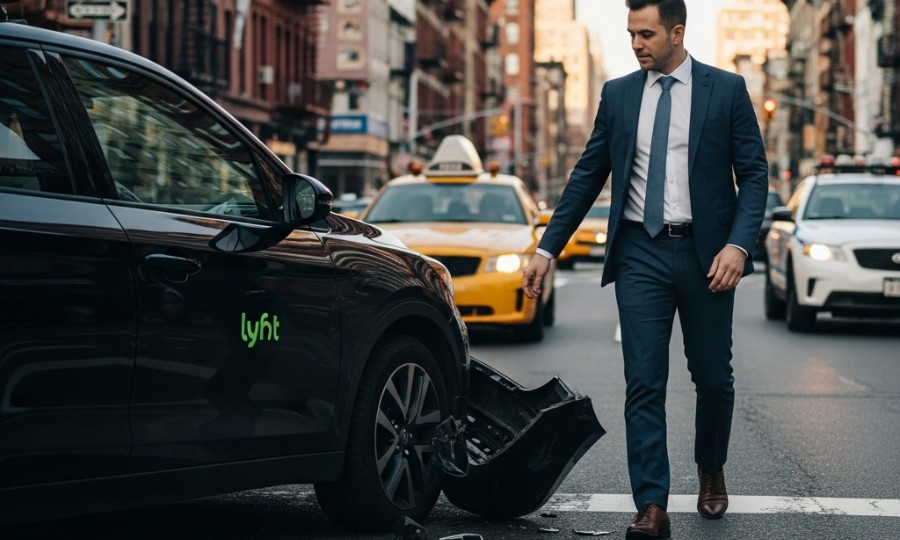
Picture this: you’re rushing through the busy streets of the Bronx, perhaps heading to a Yankees game or catching a train, and you’ve opted for the convenience of a rideshare. Suddenly, there’s a jolt, the screech of tires, and the undeniable reality of an accident. Your heart races, and in the immediate aftermath, a million questions flood your mind. Who’s responsible? What about my injuries? Navigating a car accident is stressful enough, but when an Uber or Lyft is involved, the complexities multiply. Don’t you agree that understanding your legal rights in such a scenario feels incredibly daunting?
Here’s the thing: rideshare accidents aren’t like your typical fender-benders. The emergence of companies like Uber and Lyft has revolutionized transportation, but it’s also introduced a unique set of challenges when it comes to liability and insurance. Especially here in New York, with our specific no-fault insurance laws, figuring out who pays for what can feel like untangling a particularly stubborn knot. But don’t worry, we’re here to help you understand the landscape.
Untangling the Unique Web of Bronx Rideshare Claims
When you’re involved in a car accident, usually it’s a straightforward process of determining fault between two personal insurance policies. But with rideshares, you’re dealing with a commercial entity, which means a whole different ballgame. In the Bronx, where traffic can be intense and the pace relentless, the likelihood of encountering a rideshare vehicle is incredibly high. This constant presence means more potential for incidents, making it crucial for everyone – passengers, drivers, and even pedestrians – to grasp the nuanced legal framework.
The primary distinction lies in how insurance coverage applies. Traditional personal auto insurance policies typically exclude commercial activity. This is why Uber and Lyft (and other rideshare companies) carry their own substantial insurance policies. These policies, however, aren’t always active. They kick in at different stages of a driver’s activity on the app, creating what we call a “coverage gap” or a hierarchy of coverage, which you’ll want to be familiar with. Generally speaking, the moment a driver logs into the app, their insurance situation shifts, though the extent of coverage varies until a passenger is picked up.
New York’s No-Fault & Rideshare Insurance: What You Need to Know
New York is a “no-fault” state, which fundamentally changes how personal injury claims are handled after an accident. What does this mean for you? Essentially, your own insurance policy (or the rideshare company’s no-fault coverage, depending on the scenario) will typically cover your medical expenses and a portion of lost wages, regardless of who caused the accident. This system is designed to streamline compensation for minor injuries, ensuring you get necessary care without waiting for a lengthy liability determination.
However, the no-fault system has its limits, especially for more serious injuries. If your injuries meet certain “serious injury” thresholds defined by New York law (like fractures, significant disfigurement, or permanent limitation of a body function), you can then step outside the no-fault system and pursue a claim against the at-fault party for pain and suffering, and other economic losses not covered by no-fault. This is often where a rideshare accident truly becomes complex.
Now, let’s talk about the specific insurance policies Uber and Lyft provide. These companies have multi-tiered insurance structures, which are critical to understand:
- App Off: If the rideshare driver’s app is off, their personal auto insurance is primary. Uber/Lyft’s policies aren’t involved.
- App On, Waiting for a Request: When the driver is logged into the app and waiting for a ride request, Uber and Lyft typically provide limited contingent liability coverage. This usually includes $50,000 in bodily injury per person, $100,000 in bodily injury per accident, and $25,000 in property damage. It acts as secondary coverage, meaning it kicks in if the driver’s personal insurance denies the claim or is insufficient.
- App On, En Route to Pick Up Passenger or During a Trip: This is where the big coverage comes in. While a driver is on their way to pick up a passenger or actively transporting a passenger, Uber and Lyft maintain a substantial $1 million third-party liability policy. This policy covers bodily injury and property damage to third parties (like you, if you’re a passenger, pedestrian, or driver of another vehicle) if the rideshare driver is at fault. It also includes uninsured/underinsured motorist (UM/UIM) coverage, which is vital if the other driver involved in the accident has little to no insurance.
Understanding these distinct phases is paramount. A small detail, like whether the driver had accepted a ride request, can drastically change which insurance policy is responsible for your compensation. It’s truly a maze, isn’t it?
Decoding Liability: Who Pays After a Rideshare Accident in the Bronx?
Determining liability in a rideshare accident depends heavily on whose fault it was and what role you played in the incident. Let’s explore a few scenarios that unfortunately play out too often on the streets of the Bronx:
Scenario 1: You’re a Rideshare Passenger.
Imagine you’re a passenger in an Uber heading home through Mott Haven. Another driver, distracted by their phone, runs a red light and broadsides your rideshare vehicle. Since the Uber driver was actively transporting you, Uber’s $1 million liability policy would likely be triggered. You, as the passenger, would typically pursue your no-fault benefits first (either through your own auto insurance if you have it, or through the Uber driver’s policy, or even Uber’s policy if no other no-fault coverage is available). For injuries exceeding no-fault limits, you’d then have a claim against the at-fault driver’s insurance and potentially Uber’s UM/UIM coverage if the other driver was uninsured or underinsured. It’s a complex dance of policies, but the good news is that as a passenger, you often have multiple avenues for recovery.
Scenario 2: You’re a Pedestrian Hit by a Rideshare Driver.
Consider walking across Grand Concourse in Fordham Heights. A Lyft driver, who is logged into the app and en route to pick up a passenger, makes an illegal turn and strikes you in the crosswalk. In this case, Lyft’s $1 million liability coverage would almost certainly apply. As a pedestrian, you’re considered a “covered person” under New York’s no-fault law, meaning you’d seek initial medical benefits from the Lyft driver’s personal insurance, Lyft’s no-fault policy, or your own auto insurance if you have it. For serious injuries, you’d then pursue a claim against Lyft’s substantial third-party liability policy. This is why immediate documentation is so vital – proving the driver was “on-duty” is key.
Scenario 3: You’re a Rideshare Driver Involved in an Accident.
What if you’re the Uber driver, logged into the app and waiting for a request near Arthur Avenue, and another vehicle rear-ends you? Your personal insurance would be primary here, but if that policy denies coverage due to commercial activity, Uber’s contingent liability coverage ($50,000/$100,000/$25,000) would likely kick in as secondary. If you had a passenger or were en route to one, the $1 million policy applies. It really underscores the importance of knowing your own personal policy’s stance on ridesharing and ensuring you have adequate coverage.
As you can see, the specific circumstances and the driver’s ‘status’ on the app are incredibly influential. You might be thinking that all these rules and policies make securing fair compensation feel impossible, right? That’s why professional guidance is so valuable.
Your Action Plan After a Bronx Rideshare Crash
Being involved in an accident is disorienting, but knowing what steps to take immediately afterward can significantly impact your ability to secure fair compensation and protect your legal rights. Don’t you want to be prepared?
- Ensure Safety and Seek Medical Attention: Your health is paramount. Move to a safe location if possible. Call 911 immediately if anyone is injured. Even if you feel fine, get checked out by a medical professional as soon as possible. Some injuries, like whiplash or concussions, might not manifest symptoms until hours or days later. Documenting your injuries early is critical for any future claim.
- Contact the Police: Always call the police to the scene, especially in the Bronx. A police report creates an official record of the accident, which includes important details like the date, time, location, parties involved, and sometimes an initial assessment of fault. Be sure to get the police report number.
- Gather Evidence at the Scene: If you’re able and it’s safe to do so, collect as much information as possible.
- Take photos and videos: Capture vehicle damage, the accident scene from various angles, road conditions, traffic signals, and any visible injuries.
- Exchange information: Get names, contact details, insurance information, and driver’s license numbers from all drivers involved.
- Identify the rideshare driver and company: Confirm they were driving for Uber or Lyft. Get the driver’s name, the vehicle’s license plate number, and ask for proof they were on an active trip (a screenshot of their app showing the trip details can be invaluable).
- Witness information: If there are witnesses, get their names and contact details. Their testimony can be incredibly helpful.
- Notify the Rideshare Company: Report the accident to Uber or Lyft through their app or website as soon as you can. This formal notification is crucial for activating their insurance policies.
- Do NOT Give Recorded Statements Without Legal Advice: Insurance adjusters, including those from rideshare companies, might contact you quickly. It’s usually best to consult with an attorney before giving any recorded statements or signing any documents. You don’t want to inadvertently jeopardize your claim.
- Contact an Experienced Bronx Rideshare Accident Attorney: This is arguably the most crucial step. Navigating the unique interplay of New York’s no-fault laws and complex rideshare insurance policies is incredibly challenging on your own. A seasoned attorney who understands Bronx personal injury law can assess your situation, identify all potential sources of compensation, handle communications with insurance companies, and fight to ensure you receive the fair settlement you deserve. We’ve seen firsthand how victims struggle to manage these cases alone.
The truth is, while rideshares offer unparalleled convenience, they also add layers of legal complexity when accidents occur. From the moment of impact on a busy Bronx street to the intricate dance of insurance policies, it can feel overwhelming. But you don’t have to face it alone. Understanding your rights and having a professional advocate by your side can make all the difference in securing the compensation you need to recover and move forward. Taking these actionable steps can truly set you on the right path.
This article was drafted with AI assistance. Please verify all claims and information for accuracy. The content is for informational purposes only and does not constitute professional advice.
Free Consultation
We want to hear about your case! Fill in the form to speak to a Bronx personal injury attorney now!
Follow us for legal tips and case results:
