
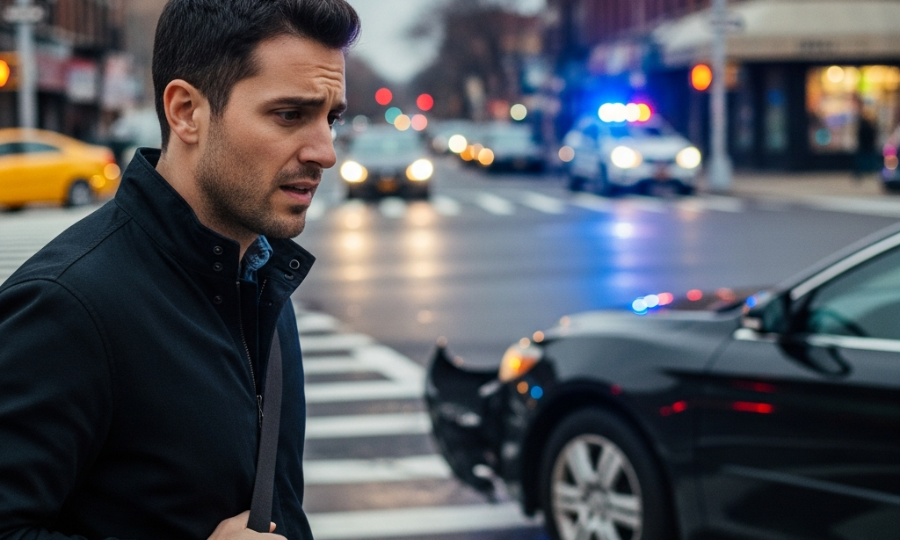
Being struck by a vehicle at a Bronx intersection can turn your world upside down in an instant. The immediate aftermath is often chaotic, filled with pain, confusion, and uncertainty. Knowing your rights and the crucial steps to take can protect your health and your potential legal claim. As seasoned Bronx personal injury lawyers, we understand the challenges local accident victims face. We have seen firsthand how quick, informed action can make a significant difference in the outcome of a case.
Key Takeaways
- Seek immediate medical attention after a pedestrian accident, even if injuries seem minor, as it creates vital medical records for your claim.
- Always call 911 and obtain a police report number, as this official documentation is crucial for your personal injury case.
- Do not give recorded statements or admit fault to insurance adjusters; their goal is to minimize payouts, not protect your interests.
- New York’s No-Fault insurance requires filing a claim within 30 days to cover medical expenses and lost wages up to $50,000, regardless of fault.
10 Essential Tips for Pedestrians After a Bronx Intersection Accident
1. Prioritize Your Safety and Seek Immediate Medical Attention
Your health is paramount. Even if you feel fine, seek medical attention immediately after a pedestrian accident. Injuries like traumatic brain injuries, internal bleeding, and spinal damage often do not show obvious symptoms right away. A same-day medical record is one of the most important pieces of evidence linking your injuries directly to the crash. Medical documentation is the foundation for a successful personal injury claim, providing clear evidence of your injuries, treatments, and prognosis. Delaying medical care can allow insurance companies to argue that your injuries were not serious or were unrelated to the accident. Always call 911 if you are injured or killed in a traffic crash. Your well-being comes first, always.
2. Contact Law Enforcement and Document the Scene
Immediately call 911 after any pedestrian accident that results in injury or death. A police report is essential evidence, documenting the driver’s identity, the circumstances of the crash, and any traffic violations observed. In New York, drivers are legally required to stop and remain at the scene when a pedestrian is injured under Vehicle and Traffic Law § 600. If the driver flees, the police report initiates a hit-and-run investigation. Ask the responding officers for the police report number before they leave the scene. This number is crucial for you or your attorney to obtain the full report later.
3. Gather Driver and Vehicle Information
If you are able and it is safe to do so, collect vital information from the driver involved. This includes their full name, driver’s license number, license plate number, and their insurance company’s name and policy number. If the driver was operating a company vehicle, note the employer’s name and any identifying markings. This employer information can be significant when pursuing a claim under legal doctrines that hold employers responsible for employee negligence. Collecting this data at the scene protects your future claim.
4. Secure Witness Information
Eyewitness accounts are among the most persuasive forms of evidence when fault is disputed. Bystanders who saw the crash can offer neutral accounts that support your claim. Get the names and contact details, including phone numbers, of any witnesses before they leave the scene. Ask them to stay until the police arrive if possible. Witnesses who are not involved in the accident have no stake in the outcome and are generally viewed as credible by insurers and juries alike.
5. Preserve Crucial Evidence at the Scene
Evidence disappears quickly, so documenting the scene is vital. Take photographs and videos of everything relevant. This includes the vehicle that struck you, the road, crosswalk markings, traffic signals, and any visible injuries you sustained. Capture wide shots of the intersection and close-ups of skid marks or vehicle damage. Note the locations of any nearby surveillance cameras, as footage can be critical evidence. These images and details freeze the accident in time before the scene changes.
6. Understand New York’s No-Fault Insurance Law
New York is a No-Fault state, which means pedestrians injured by an insured vehicle are entitled to Personal Injury Protection (PIP) benefits, regardless of who caused the accident. These benefits cover reasonable and necessary medical expenses and up to 80 percent of lost wages, capped at $2,000 per month for up to three years. The basic economic loss for each eligible injured person is capped at $50,000 per accident. You must file a No-Fault claim within 30 days of the accident. Missing this deadline can result in a denial of these crucial benefits. These benefits do not, however, cover pain and suffering.
7. Avoid Speaking with Insurance Adjusters Without Legal Counsel
After an accident, an insurance adjuster may contact you. Remember, adjusters work for the insurance company, and their primary goal is to minimize the payout on your claim, not to protect your interests. You are not legally required to give a recorded statement to the at-fault driver’s insurer. Adjusters are skilled interviewers, and questions that sound neutral can be designed to elicit responses that minimize your injury or suggest you were partially at fault. Anything you say, even a polite apology, can be used against you. The safest approach is to keep the conversation brief, decline a recorded statement, and speak with an attorney before any substantive discussion. Once a Bronx personal injury lawyer represents you, all communications from the adverse insurer are directed through your attorney’s office.
8. Keep Meticulous Records of Everything
From the moment of the accident, start a comprehensive record-keeping system. This includes all medical records, bills, receipts for medications, and documentation of any missed work or lost wages. Medical records, such as X-rays, MRIs, therapy logs, and prescription histories, demonstrate the scope and cost of treatments you have undergone. These records reinforce the legitimacy of your claim and help justify compensation for long-term medical costs and any permanent impact on your quality of life. Detailed treatment records also show that you have been proactive in addressing your injuries.
9. Understand Key Legal Deadlines
New York law imposes strict deadlines on pedestrian accident claims. For most personal injury lawsuits, the statute of limitations is generally three years from the date of the accident. However, claims against government entities, such as the City of New York, require a Notice of Claim to be filed within 90 days of the accident, with the lawsuit itself typically filed within one year and 90 days. As noted earlier, a No-Fault claim must be filed within 30 days. Missing any of these deadlines can permanently bar your right to recovery. Our injury attorneys in the Bronx understand these complex timelines and can ensure your claim is filed correctly and on time.
10. Seek Legal Guidance from an Experienced Bronx Personal Injury Lawyer
Navigating the aftermath of a pedestrian accident in the Bronx is complex. You are dealing with physical recovery, financial strain, and the intricacies of legal procedures. An experienced accident attorney in the Bronx can provide invaluable guidance, protecting your rights and fighting for the compensation you deserve. They can help investigate the accident, gather evidence, handle communications with insurance companies, and ensure all legal deadlines are met. The Bronx logged 5,119 collisions and 2,249 injuries in the first five months of 2026, and carries a serious injury rate 20 to 23% above the citywide average. East 138th Street holds the highest fatality rate per mile in New York City, with 12 people killed on a 1.5-mile stretch between 2014 and 2023. These statistics highlight the real dangers pedestrians face and the importance of having strong legal representation. If you need an experienced Bronx accident lawyer, our firm is ready to fight for you.
Quick Recap
After a pedestrian accident in a Bronx intersection, your immediate actions are critical. Prioritize medical care, even for seemingly minor injuries, and ensure law enforcement is called to the scene. Diligently collect all available evidence, including driver details, witness contacts, and photographs. Understand New York’s No-Fault insurance system and its strict 30-day filing deadline. Crucially, avoid direct communication with insurance adjusters and seek legal advice from a qualified Bronx personal injury lawyer to protect your rights and navigate the complex legal landscape effectively.
Sources
- NYC Department of Transportation — DOT Launches New “Daylighting” Pedestrian Safety Program at 33 Bronx Locations
- Justia — New York Vehicle and Traffic Law § 1151 (2025) – Pedestrians’ Right of Way in Crosswalks.
- New York State Department of Motor Vehicles — Chapter 12: If You Are in a Traffic Crash
- NY.gov — New York State Vehicle & Traffic Law For Pedestrians
Related Reading
Frequently Asked Questions
What is the first thing a pedestrian should do after being hit by a car in the Bronx?
The very first step is to prioritize your safety and seek immediate medical attention, even if you feel fine. Many serious injuries do not show immediate symptoms. Calling 911 to get medical help and ensure police respond to create an official report is also crucial.
How long do I have to file a personal injury lawsuit after a pedestrian accident in New York?
Generally, you have three years from the date of the accident to file a personal injury lawsuit in New York. However, if your claim is against a government entity, you must file a Notice of Claim within 90 days, followed by a lawsuit within one year and 90 days.
Does New York’s No-Fault insurance cover pedestrians?
Yes, New York is a No-Fault state, and pedestrians injured by an insured vehicle can receive Personal Injury Protection (PIP) benefits. These benefits cover medical expenses and a portion of lost wages, up to $50,000 for basic economic loss, regardless of who was at fault. You must file this claim within 30 days of the accident.
Should I talk to the other driver’s insurance company after a pedestrian accident?
No, it is strongly advised not to give recorded statements or discuss the accident in detail with the at-fault driver’s insurance company without legal counsel. Insurance adjusters represent their company’s interests, not yours. Anything you say can be used to minimize or deny your claim.
This article was drafted with AI assistance. Please verify all claims and information for accuracy. The content is for informational purposes only and does not constitute professional advice.
Free Consultation
We want to hear about your case! Fill in the form to speak to a Bronx personal injury attorney now!
Follow us for legal tips and case results:
