
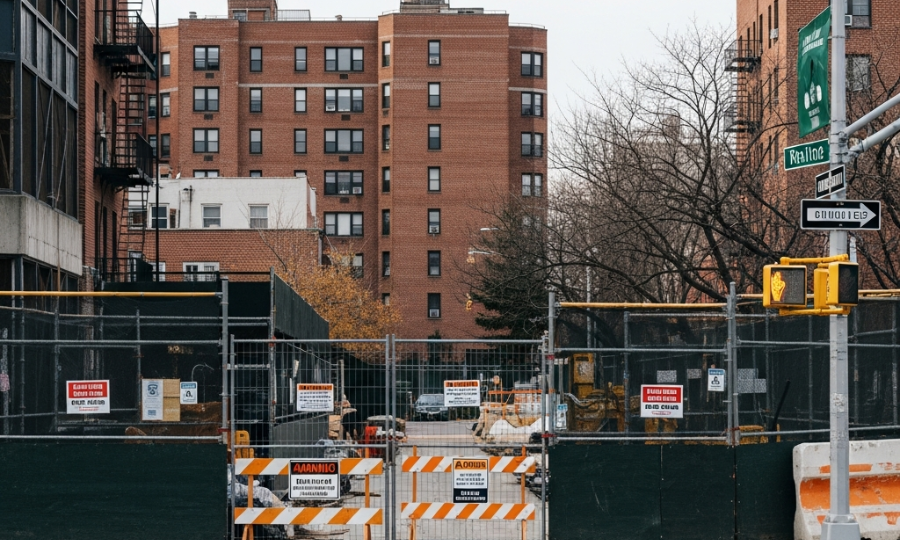
When you walk down the street in the Bronx, you expect the scaffolding above you to keep you safe, not threaten your life. However, recent events have shown that falling masonry and structural collapses are a severe danger to everyday New Yorkers and construction workers alike. From the devastating partial collapse of a residential building on Billingsley Terrace to demolition failures on Burnside Avenue, these incidents highlight a systemic disregard for safety protocols by some property owners and contractors.
Key Takeaways
- Catastrophic building failures like the Billingsley Terrace collapse are often caused by a combination of engineering design errors and contractor failure to implement structural safeguards.
- The Occupational Safety and Health Administration identifies struck-by incidents as a primary hazard, and New York Committee for Occupational Safety and Health data shows NYC construction deaths reached a ten-year high of 30 fatalities in 2023.
- New York Labor Law Section 240 holds property owners and general contractors absolutely liable for gravity-related injuries when workers are engaged in specified construction activities and proper safety devices are not provided or are inadequate.
Our Bronx personal injury lawyers have decades of experience helping accident victims hold negligent parties accountable. In this guide, we analyze the legal and safety implications of struck-by debris and building collapses on Bronx worksites. If you or a loved one has suffered an injury due to falling debris, understanding your rights is the first step toward securing the justice and compensation you deserve.
1. The 1915 Billingsley Terrace Structural Collapse
In December 2023, a seven-story apartment building at 1915 Billingsley Terrace near West Burnside Avenue in Morris Heights partially collapsed, leaving entire apartments exposed to the open air. According to an official investigation report released by the New York City Department of Buildings in November 2024, the catastrophic failure resulted from a professional engineer’s failure to correctly identify load-bearing structures on repair plans, combined with a contractor’s failure to implement proper safeguards while removing structural elements.
Why it stands out: This disaster showcases how professional negligence during active facade repairs can directly cause a massive structural failure. Although miraculously no one died, the New York City Department of Buildings reported that the collapse displaced over 100 residents from their homes, illustrating the immense human toll of structural corner-cutting.
2. The 57 East Burnside Avenue Demolition Failure
In January 2026, a vacant commercial building under active demolition at 57 East Burnside Avenue partially collapsed, sending tons of brick, mortar, and sidewalk scaffolding crashing onto Walton Avenue. The New York City Department of Buildings suspended the general contractor’s registration, citing a history of unsafe demolition practices and revealing that the contractor was actively violating a stop-work order issued just days before the collapse.
Why it stands out: This incident illustrates how some contractors choose to ignore safety mandates and active government stop-work orders to rush their projects. When a contractor willfully violates safety orders, they create an incredibly hostile and dangerous environment for both their workers and innocent pedestrians passing by the site.
3. Struck-By Debris and the “Fatal Four” Hazards
The Occupational Safety and Health Administration classifies “struck-by” incidents as one of the “Fatal Four” leading causes of construction-related deaths. According to the New York Committee for Occupational Safety and Health 2025 Deadly Skyline report, construction fatalities in New York City rose to 30 deaths in 2023, representing a ten-year high. A significant portion of these fatal incidents involved falling objects, collapsing masonry walls, and unsecured construction materials.
Why it stands out: Struck-by accidents are almost entirely preventable if supervisors enforce basic safety measures. When contractors fail to secure tools, install safety netting, or erect sturdy sidewalk sheds, they turn everyday Bronx sidewalks and active job sites into high-risk hazard zones.
4. Property Owner Liability and NYC Building Code Violations
Under New York law, property owners have a non-delegable duty to maintain their premises in a reasonably safe condition. Following the Billingsley Terrace collapse, city records indicated the property had been flagged for numerous building violations, including immediately hazardous conditions. When an owner ignores outstanding Department of Buildings violations, they demonstrate a clear pattern of negligence that can be used to establish liability in a personal injury lawsuit.
Why it stands out: A long history of unaddressed building violations is often the smoking gun in a premises liability case. Our injury attorneys in the Bronx handle car, construction, and slip-and-fall cases, and we know how to use city inspection records to prove that an owner knew about a hazard and chose to do nothing about it.
5. New York Labor Law Section 240 and Worker Protection
New York State provides powerful legal protections for construction workers injured by falling objects. Under New York Labor Law Section 240, commonly known as the Scaffold Law, owners and general contractors face absolute liability for gravity-related accidents within the statute’s scope involving elevation differentials and inadequate safety devices. This means that if a worker is struck by a falling tool, brick, or piece of debris that should have been properly secured, the law holds the site owners and contractors financially responsible for the resulting injuries.
Why it stands out: The Scaffold Law is a vital shield for Bronx construction workers, ensuring they do not have to bear the financial burden of a workplace injury alone. This statute allows injured workers to pursue substantial compensation for medical bills, lost wages, and pain and suffering when safety equipment is inadequate or entirely absent.
How to Choose the Right Legal Representation After an Accident
Navigating the aftermath of a building collapse or a falling debris injury can feel overwhelming. To protect your rights, you must act quickly to preserve evidence and identify all potentially liable parties, which may include property owners, general contractors, engineers, and sub-contractors.
First, seek immediate medical attention to document your injuries and establish a clear link to the accident. Next, ensure that an official report is filed with the police or the New York City Department of Buildings. Finally, consult a qualified attorney who understands the local courts and the complexities of New York construction and premises liability laws.
If you need an experienced Bronx accident lawyer, our firm is ready to fight for you. We will investigate the site, analyze city violation records, and build a compelling case to secure the maximum compensation you deserve.
Sources
- New York City Department of Buildings, City Releases Investigation Report Into 2023 Bronx Building Collapse
This article was drafted with AI assistance. Please verify all claims and information for accuracy. The content is for informational purposes only and does not constitute professional advice.
Free Consultation
We want to hear about your case! Fill in the form to speak to a Bronx personal injury attorney now!
Follow us for legal tips and case results:
