
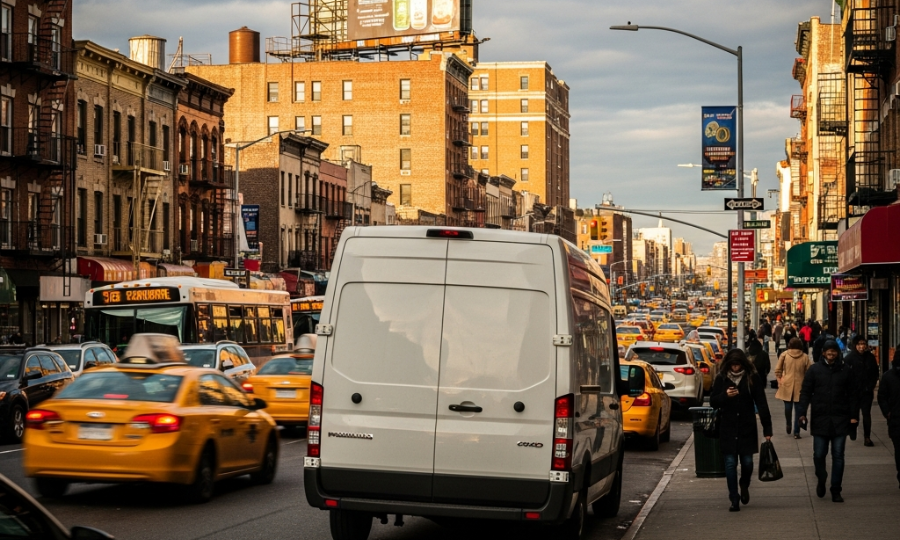
5 Tips for Bypassing Independent Contractor Shields in Bronx Amazon Delivery Crash Claims
Getting hit by a delivery van can change your life in a second. Our Bronx personal injury lawyers have decades of experience helping accident victims navigate these devastating collisions. Delivery giants often attempt to shield themselves behind third-party corporate structures. However, you do not have to accept a corporate brush-off when a last-mile delivery driver injures you on Bronx streets.
Key Takeaways
- Under New York’s Commercial Goods Transportation Industry Fair Play Act, cited by AEE Law in March 2026, commercial delivery drivers are legally presumed to be employees rather than independent contractors.
- Internal tracking tools like certain apps and AI-powered cameras can provide evidence of real-time corporate control.
- Recent courtroom decisions in other jurisdictions illustrate how juries may reject contractor shields when corporate control is demonstrated.
As detailed by Nick Rose Law in June 2026, delivery van accident claims in New York City may involve the driver, the third-party Delivery Service Partner employer, and Amazon based on operational control. You can hold every responsible party accountable by understanding how corporate control works in court. Here are five crucial tips for breaking through corporate shields after a delivery truck collision.
1. Challenge the Independent Contractor Defense Immediately
Corporate logistics companies rely heavily on third-party contractors to handle package deliveries. As reported by Sam Aguiar Injury Lawyers in July 2026, Amazon’s Delivery Service Partner network encompasses roughly 4,500 small businesses employing approximately 390,000 drivers across 19 countries. Corporate defense attorneys claim these small businesses are completely independent. Consequently, corporate parent companies argue they carry zero legal liability for crashes on local roads.
However, you can challenge this contractor shield by proving direct corporate oversight. Under New York’s Commercial Goods Transportation Industry Fair Play Act, as cited by AEE Law in March 2026, commercial delivery drivers are legally presumed to be employees rather than independent contractors unless the hiring entity successfully rebuts the statutory presumption. First, establish that the driver performed core delivery functions under continuous instruction. Second, demonstrate that the driver had no independent business operation. Therefore, state law works in your favor from the very start of your lawsuit.
2. Expose Real-Time Monitoring and Route Control Systems
Tech-driven logistics firms monitor their drivers every single minute. As reported by AEE Law in March 2026, Amazon monitors and manages last-mile drivers using proprietary devices like certain apps and AI-powered cameras installed inside delivery vans. These tracking tools capture speed, sudden braking, distracted driving, and precise package delivery stops. Corporate managers use these exact data streams to enforce strict package quotas on everyday routes.
In addition, this continuous digital oversight establishes clear legal agency. Our injury attorneys in the Bronx handle car, construction, and slip-and-fall cases, and we know that real-time tracking refutes claims of independence. For example, in a South Carolina case, a jury rejected an independent-contractor defense and awarded $44.6 million in total damages, including $30 million in punitive damages, after finding a company exercised control over the DSP driver. Consequently, electronic tracking evidence provides the foundation for establishing vicarious corporate liability.
3. Demand Internal Safety Audits and Quota Records in Discovery
Corporate defense lawyers often try to hide behind standard liability limits. Personal injury plaintiffs may seek to bypass contractor shields by using formal discovery subpoenas to obtain internal safety audit reports, DSP communications, and delivery quotas. You must demand these records immediately after filing your personal injury lawsuit. Delivery schedules often force drivers to rush through busy neighborhood streets, creating severe hazards for pedestrians and motorists alike.
Also, internal communications often show that corporate executives knew about unsafe driving habits before the crash occurred. For example, in a Georgia State Court case, a jury returned a $16.2 million verdict, holding a company 85% responsible on a negligent training claim and finding it exercised sufficient operational control over the DSP to render it vicariously liable as an employer. Therefore, aggressive discovery exposes systemic corporate negligence behind individual traffic crashes.
4. Leverage Recent Precedents That Hold Corporate Parent Companies Liable
Courts across the country are holding parent corporations accountable for delivery truck accidents. For example, in a Massachusetts lawsuit, a company stipulated to vicarious agency liability shortly before trial, leading to a $56 million jury verdict for catastrophic injuries caused by a DSP driver. This landmark outcome shows that parent logistics companies realize their contractor shields are failing in front of modern juries.
As a result, your legal strategy should build on these established courtroom precedents. Highlight how parent companies control uniforms, vehicle branding, delivery sequences, and termination decisions. When you show that a local delivery partner cannot alter its own routes or scheduling rules, judges and juries quickly recognize that the contractor relationship is a legal fiction. Also, citing successful verdicts from other jurisdictions pushes defense attorneys toward serious settlement discussions early in litigation.
5. File Suit Against All Three Potential Defendants
Never limit your personal injury lawsuit to just the individual driver. The driver rarely carries sufficient liability coverage for severe orthopedic or brain injuries. Also, the local delivery contractor may carry capped insurance coverage that cannot cover lifelong medical expenses. Therefore, naming the parent delivery corporation opens access to major corporate insurance policies and substantial commercial resources.
Finally, broad legal claims create leverage during settlement negotiations. When you sue the driver, the third-party contractor, and the parent corporation simultaneously, you prevent them from shifting blame onto an absent party. Each defendant must answer for its role in putting an unsafe driver on Bronx streets. Consequently, a comprehensive litigation strategy protects your right to full financial recovery.
Bottom Line
Navigating a delivery truck crash claim requires swift action and aggressive investigation. Corporate delivery giants spend millions attempting to avoid liability, but modern technology records prove their daily control over delivery drivers. If you need an experienced Bronx accident lawyer, our firm is ready to fight for you.
This article was drafted with AI assistance. Please verify all claims and information for accuracy. The content is for informational purposes only and does not constitute professional advice.
Free Consultation
We want to hear about your case! Fill in the form to speak to a Bronx personal injury attorney now!
Follow us for legal tips and case results:
