
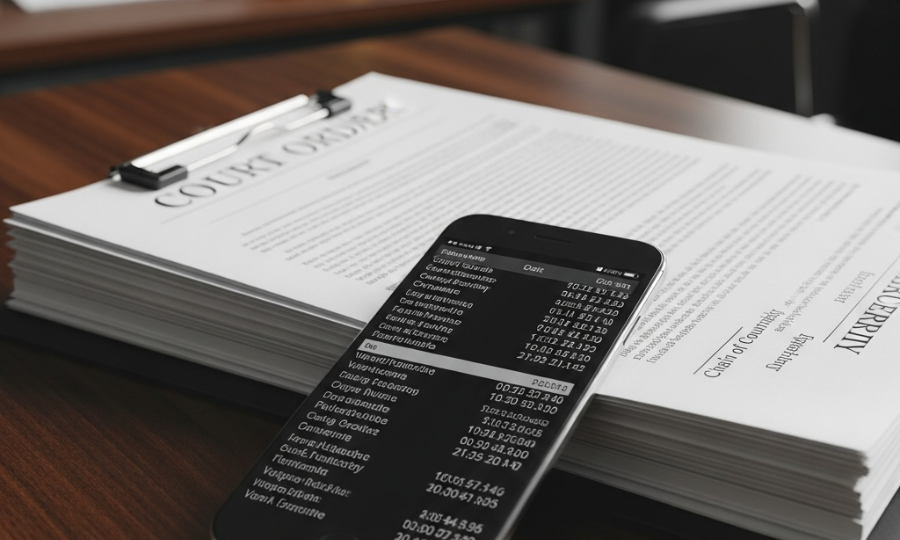
A split second of distraction on the Major Deegan Expressway or Grand Concourse can change a life forever. When a negligent driver crashes into your vehicle, they rarely admit they were looking down at a mobile device. Proving distracted driving requires clear evidence. However, securing that proof involves navigating strict legal standards and technical rules. Our Bronx personal injury lawyers know how to uncover the truth using cellular records and digital forensics.
Key Takeaways
- Under CPLR Section 3120 and the Stored Communications Act, subpoenas yield non-content cell metadata like call timestamps and SMS logs, but not private text message text.
- New York courts enforce the Morano standard, requiring initial evidence of distraction before compelling cell phone record discovery.
- Mobile carriers retain session data for a limited time, making immediate spoliation letters essential before issuing formal subpoenas.
- Violating NY Vehicle and Traffic Law sections may constitute negligence per se, but it is not automatically established in civil injury lawsuits.
Many crash victims assume that subpoenaing phone records is simple. They believe a simple request to a wireless carrier will reveal every text, tap, and post. In reality, proving liability in New York courts requires a strategic legal approach. You must understand what carrier metadata reveals and where physical app logs become necessary.
Understanding Cell Carrier Metadata Under CPLR Section 3120
Cellular service providers maintain extensive network logs for every account. In New York civil litigation, attorneys use specific statutes to request these records. Under New York Civil Practice Law and Rules Section 3120, litigators can serve third party subpoenas duces tecum on wireless carriers after an action has commenced. These subpoenas demand official corporate records regarding account activity.
Carrier metadata provides valuable timeline facts. For example, call logs display exact start times, call durations, and phone numbers. Text message metadata shows the precise seconds when an SMS was sent or received. Additionally, data session logs detail when a phone connected to cellular towers. These records establish a reliable timeline of events preceding the collision.
However, carrier records have legal and technical limitations. Federal law strictly limits what wireless providers can share in civil lawsuits. The federal Stored Communications Act, codified at 18 U.S.C. Section 2702(a), prohibits electronic communication service providers from voluntarily disclosing the actual content of communications in civil litigation. A cell carrier cannot produce the text body of a message or the private contents of an email.
Also, carrier records only reveal metadata. A carrier log shows that a data connection occurred, but it cannot confirm human interaction. For instance, background app updates generate cellular data transactions without the driver ever touching the screen. Because of this distinction, carrier metadata is often only the first step in building your case.
Overcoming Court Barriers and the Morano Standard
You cannot simply demand a driver’s personal phone records without cause. New York courts protect individual privacy against baseline fishing expeditions. Judges require preliminary evidence before forcing a defendant to surrender phone records.
The precedent established in Morano v. Slattery Skanska, Inc. helped define the legal threshold in New York. Under the Morano standard, plaintiffs must present initial evidence of driver distraction before courts will compel the disclosure of cell phone records. Initial proof can include police accident reports, eyewitness statements, or deposition testimony. For instance, if an eyewitness saw the driver holding a phone, or if the police report notes a driver admission, the court will likely approve the subpoena demand.
Once a subpoena is served on a third party carrier, strict procedural timelines apply. Under New York CPLR Rule 3122, a carrier or subpoenaed non party served with a CPLR 3120 demand has 20 days from service to serve written objections stating specific grounds for non compliance. Acting quickly ensures all parties meet court guidelines and avoid unnecessary litigation delays.
Why Physical Device Forensics and App Logs Matter
While carrier metadata provides broad network records, local app logs offer definitive proof of driver distraction. Modern smartphone usage heavily involves mobile applications like Instagram, WhatsApp, TikTok, and web browsers. Many of these applications operate using encrypted networks or home Wi Fi, leaving no trace on traditional cellular carrier logs.
Cellular carrier data logs show background or active data connections. However, they cannot identify specific application level actions such as swiping on social media or composing an encrypted message on WhatsApp. To prove these precise actions, your attorney must request physical device forensics.
Digital forensic experts inspect the physical smartphone to extract local application logs, touch screen interactions, and screen wake times. Forensics can reveal whether the screen was illuminated, which app occupied the foreground, and whether the user actively typed a response at the exact minute of impact. This detailed evidence bridges the gap between passive network connection and active manual distraction.
The Urgency of Preservation Demands and Retention Limits
Timing is critical when gathering electronic evidence after a serious crash. Wireless service providers do not keep customer activity records indefinitely. Carrier retention periods vary significantly, with some metadata retained for years rather than just 6-12 months. Once that window closes, key evidence may be permanently erased through automated system overwrites.
To prevent the destruction of vital records, your legal team must issue immediate spoliation and preservation letters. Our injury attorneys in the Bronx handle car, construction, and slip and fall cases with aggressive early investigation. Sending formal preservation demands to both the driver and the wireless carrier legally obligates them to freeze data deletion cycles prior to formal subpoena issuance.
Connecting Distracted Driving to Statutory Negligence
Uncovering digital evidence is essential because it directly establishes legal liability under New York law. Demonstrating a statutory violation creates a direct path to proving fault in personal injury lawsuits.
Under New York Vehicle and Traffic Law Section 1225-c, operating a handheld mobile telephone to engage in a call while driving is illegal. Similarly, Section 1225-d prohibits operating a handheld electronic device to compose, send, access, or read data while driving. Violations may support negligence per se under New York common law, but do not automatically establish it in civil personal injury actions.
Negligence per se means the court considers the driver negligent as a matter of law because they violated a safety statute. According to research published by the Institute for Traffic Safety Management and Research at the University at Albany, driver inattention or distraction was reported as a contributing factor in 1 out of every 10 fatal crashes and 1 in 4 personal injury crashes in New York. Establishing negligence per se eliminates debate over whether the driver’s actions were unreasonable, shifting the focus directly to securing full compensation for your injuries.
Key Steps in Building a Distracted Driving Claim
Building a successful claim requires quick action and thorough investigation. If you suspect a distracted driver caused your crash, taking specific legal steps immediately protects your rights.
Securing Initial Evidence at the Crash Scene
Evidence gathering begins right after the impact. Inform the responding police officer if you saw the driver holding a phone or looking down. Ensure the officer records your observation in the official police accident report. This detail serves as the initial evidence required under the Morano doctrine.
Issuing Formal Preservation Letters
Your attorney must draft and deliver spoliation notices to the defendant and their insurer. These letters instruct the party to preserve the physical mobile device, local application data, and carrier account logs. This step prevents the defense from claiming accidental data loss later.
Commencing Litigation and Subpoenaing Records
Once a lawsuit is filed, your lawyer issues CPLR Section 3120 subpoenas to cellular service providers. If carrier metadata indicates heavy data usage or text activity at the time of the collision, your attorney can motion the court to compel an independent forensic examination of the physical smartphone.
Analyzing Forensic Data with Expert Witnesses
Digital forensic specialists analyze extracted device artifacts. They correlate screen wake times and application user interface events with the precise time of collision recorded by vehicle event data recorders or emergency response logs. This detailed reconstruction presents an indisputable narrative to insurance adjusters and juries.
If you need an experienced Bronx accident lawyer, our firm is ready to fight for you.
Sources
- United States Code, 18 U.S.C. Section 2702 – Stored Communications Act
- New York State Senate, New York Vehicle and Traffic Law Section 1225-c and Section 1225-d
This article was drafted with AI assistance. Please verify all claims and information for accuracy. The content is for informational purposes only and does not constitute professional advice.
Free Consultation
We want to hear about your case! Fill in the form to speak to a Bronx personal injury attorney now!
Follow us for legal tips and case results:
