
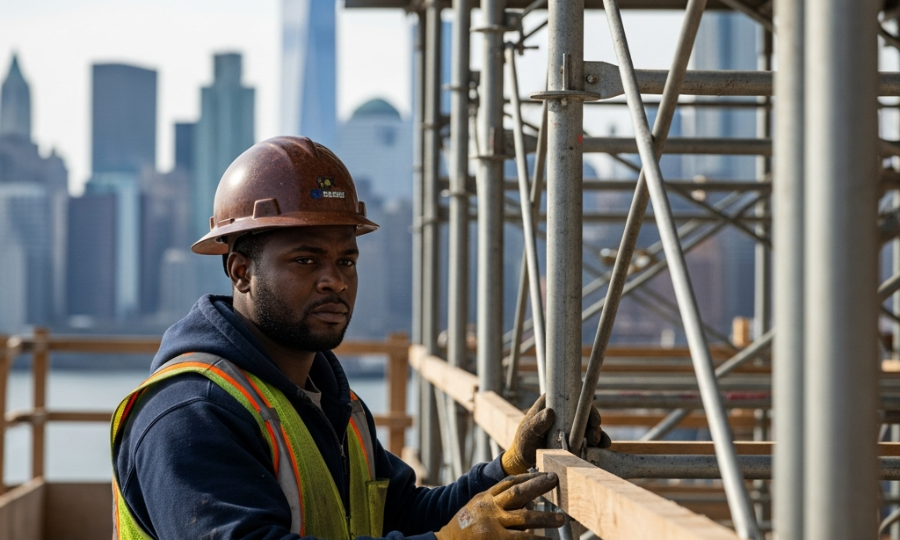
When a scaffolding accident strikes in the Bronx, the aftermath can be devastating. Injured construction workers often face severe physical pain, mounting medical bills, and the stress of lost wages. Understanding your legal options for compensation is crucial. Our Bronx personal injury lawyers have decades of experience helping accident victims navigate these complex pathways, from workers’ compensation claims to third-party personal injury lawsuits.
Key Takeaways
- Workers’ compensation provides no-fault benefits for work-related injuries, covering medical care and a portion of lost wages, but typically does not include compensation for pain and suffering.
- Injured construction workers in the Bronx may pursue a third-party personal injury lawsuit against negligent parties other than their employer, such as property owners or general contractors, to recover broader damages, including pain and suffering.
- New York Labor Law 240, known as the Scaffold Law, imposes strict liability on property owners and general contractors for gravity-related accidents if they fail to provide adequate safety equipment, offering a powerful path to compensation.
- Promptly report any scaffolding accident to your employer and consider consulting an experienced Bronx accident lawyer to navigate the complex legal system and protect your rights within strict deadlines.
Many New Yorkers working on construction sites rely on scaffolding every day. However, these structures, vital as they are, also present significant hazards. OSHA states that preventing scaffold-related accidents would avoid 4,500 injuries and 50 deaths annually in the construction industry. These are not just statistics; they represent lives profoundly impacted.
Understanding Scaffolding Accidents in the Bronx
Construction sites are inherently dangerous, and scaffolding work carries particular risks. According to OSHA data and analysis of recent injury reports by the Law Offices of Eric Richman, scaffolding-related incidents lead to thousands of injuries and dozens of fatalities annually. A significant portion of these accidents stem from just three causes: equipment failure or improper assembly, slipping or tripping hazards, and falling objects. These figures underscore that many scaffolding accidents are preventable.
Common issues leading to these serious incidents include a lack of proper fall protection, such as guardrails or safety harnesses. Improper scaffold construction, with weak connections, missing planks, or unsecured components, can lead to catastrophic collapses. Unsafe access points, overloading the scaffold beyond its capacity, and inadequate worker training also contribute to the dangers. Environmental factors like strong winds, rain, or ice can make walking surfaces slippery and increase the risk of falls.
The injuries sustained in a scaffolding accident are often severe. They can include traumatic brain injuries, spinal cord damage, multiple fractures, and even wrongful death. These life-altering injuries frequently result in permanent disability and a long road to recovery, often with medical costs exceeding hundreds of thousands of dollars. Such profound impacts highlight the urgent need for comprehensive legal support.
Workers’ Compensation A Critical Safety Net
For most employees injured on the job in New York, workers’ compensation is the primary avenue for relief. This system is a state-mandated insurance program designed to provide benefits to workers who suffer job-related injuries or illnesses. The New York State Workers’ Compensation Board oversees this program, ensuring that injured workers receive necessary medical care and financial support without needing to prove who was at fault.
Workers’ compensation operates as a no-fault system. This means you can receive benefits regardless of who caused your work-related injury. This is a crucial distinction from personal injury claims. Your employer’s workers’ compensation insurance typically covers medical expenses, including doctor visits, hospital stays, surgeries, medications, and rehabilitation services. It also provides cash benefits for lost wages if you are unable to work due to your injury. These lost wage benefits are generally calculated as two-thirds of your average weekly wage, multiplied by your degree of disability.
However, workers’ compensation benefits are limited. While they cover medical costs and a portion of lost income, they do not typically include compensation for non-economic damages. This means pain and suffering, emotional distress, or loss of enjoyment of life are generally not covered under a workers’ compensation claim alone. Additionally, you generally cannot sue your employer for work injuries if you are covered by workers’ compensation insurance.
Beyond Workers’ Compensation When a Third Party is at Fault
Even with workers’ compensation benefits, the financial and emotional toll of a severe scaffolding accident can be immense. Many injured workers find that workers’ compensation alone does not fully cover their losses. Fortunately, New York law often allows for additional legal action through a personal injury lawsuit, especially when a third party’s negligence contributed to the accident. Our accident attorneys in the Bronx are well-versed in these complex situations.
A third party is typically any entity other than your direct employer. This can include a general contractor, a property owner, another subcontractor, an equipment manufacturer, or even a vendor. If their negligence or failure to provide a safe work environment caused or contributed to your scaffolding accident, you may have grounds for a personal injury claim against them.
New York Labor Law 240, often known as the “Scaffold Law,” is particularly vital for construction workers. Enacted over a century ago, this unique state regulation protects workers performing tasks at elevated heights. It mandates that property owners and general contractors provide necessary safety equipment to workers involved in tasks like erecting or dismantling scaffolding, or working on ladders and hoists. Under Labor Law 240, if an owner or contractor fails to provide adequate protection and a worker is injured in an elevation-related accident, they can be held strictly liable.
This strict liability means that the injured worker does not need to prove the owner or contractor was negligent in the traditional sense. The focus is on whether the required safety devices were provided and functioned properly. Also, under the Scaffold Law, a property owner or contractor typically cannot argue that the worker was partially at fault. This makes it easier for an injured worker to recover damages. This law is a powerful tool for protecting construction workers from falls and falling objects, which are common hazards on scaffolding.
Key Differences and Why They Matter
The distinctions between workers’ compensation and a third-party personal injury lawsuit are significant. Workers’ compensation is a no-fault system providing limited benefits, primarily medical care and a portion of lost wages. It does not typically compensate for pain and suffering. The process is administrative, typically handled through the New York State Workers’ Compensation Board.
In contrast, a personal injury claim is fault-based. You must prove that another party’s negligence caused your injury. However, these claims allow for a much broader range of damages. You can seek compensation for all past and future medical expenses, full lost wages, diminished earning capacity, pain and suffering, emotional distress, disfigurement, and loss of enjoyment of life. Personal injury lawsuits are typically handled in civil court, potentially involving a judge or jury.
For example, if a worker falls from a faulty scaffold due to missing guardrails, they would first file for workers’ compensation to cover immediate medical bills and partial lost wages. Simultaneously, if the property owner or general contractor failed to provide the necessary safety equipment, a best Bronx injury lawyer could pursue a Labor Law 240 claim against those responsible parties. This dual approach allows the injured worker to recover more comprehensive compensation, including for their pain and suffering, which workers’ comp does not address.
The Role of an Experienced Bronx Injury Lawyer
Navigating the aftermath of a scaffolding accident requires seasoned legal guidance. The interplay between workers’ compensation and third-party personal injury claims can be complex, and missing deadlines or making missteps can jeopardize your right to full compensation. An experienced Bronx injury lawyer understands these intricacies and can protect your rights.
Our legal team works diligently to investigate the accident, gather crucial evidence, and identify all potentially liable parties. We review incident reports, witness statements, safety records, and construction plans to build a strong case. This thorough approach is essential for demonstrating negligence in a personal injury claim and for proving violations under New York Labor Law 240. We also handle all communication with insurance companies, ensuring your rights are protected and you are not pressured into accepting a low settlement.
We guide you through every step of the legal process, from filing the initial workers’ compensation claim to litigating a complex personal injury lawsuit. Our goal is to ensure you receive maximum compensation for your injuries, covering not only your immediate financial needs but also your long-term care and quality of life. We understand the physical and emotional toll these accidents take on workers and their families, and we approach each case with compassion and unwavering dedication.
Taking Action After a Scaffolding Accident
If you or a loved one has been injured in a scaffolding accident in the Bronx, taking immediate action is critical. Your first priority should always be to seek immediate medical attention. Even if you believe your injuries are minor, a medical evaluation creates an official record of your condition. Notify your employer about the accident promptly, as this is crucial for workers’ compensation reporting requirements.
If possible and safe to do so, document the accident scene with photos or videos. Collect the names and contact information of any witnesses. These details can be invaluable to your legal claim. You should also report serious incidents to the NYC Department of Buildings by calling 311 or (212) 602-0431, especially if there was a fatality or an injury requiring emergency transportation. Employers are required to report such incidents to the DOB within three business days. Additionally, OSHA mandates reporting for fatalities within 8 hours and for in-patient hospitalization, amputation, or loss of an eye within 24 hours.
Do not delay in seeking legal advice. There are strict deadlines, known as statutes of limitations, for filing both workers’ compensation claims and personal injury lawsuits. For workers’ compensation claims in New York, you generally have two years from the date of injury to file, and you must notify your employer within 30 days. Personal injury lawsuits typically have a three-year statute of limitations. Consulting with an experienced Bronx accident lawyer as soon as possible ensures that all deadlines are met and your rights are fully preserved.
If you need an experienced Bronx accident lawyer, our firm is ready to fight for you. We are committed to helping injured construction workers and their families secure the justice and compensation they deserve.
Sources
- Texas Department of Insurance — Scaffold safety in construction
- NYC.gov — How To Report A Construction Accident In New York City
Related Reading
Frequently Asked Questions
What is the difference between workers’ compensation and a personal injury claim for a scaffolding accident?
Workers’ compensation is a no-fault system that covers medical expenses and a portion of lost wages for work-related injuries, but it does not compensate for pain and suffering. A personal injury claim, however, requires proving another party’s negligence and can cover a wider range of damages, including pain and suffering, full lost wages, and emotional distress.
Can I sue my employer after a scaffolding accident in the Bronx?
Generally, you cannot sue your direct employer for a work-related injury if you are covered by workers’ compensation insurance. However, you may be able to file a personal injury lawsuit against a negligent third party, such as a property owner, general contractor, or equipment manufacturer, who contributed to your accident.
What is New York Labor Law 240 and how does it apply to scaffolding accidents?
New York Labor Law 240, known as the Scaffold Law, is a state regulation designed to protect workers at elevated heights. It holds property owners and general contractors strictly liable for gravity-related accidents, like falls from scaffolds or being struck by falling objects, if they failed to provide adequate safety equipment. This law can significantly strengthen an injured worker’s personal injury claim.
What types of compensation can I recover in a personal injury lawsuit after a scaffolding accident?
In a successful personal injury lawsuit, you can recover a broad range of damages. This includes past and future medical expenses, full lost wages, diminished earning capacity, compensation for pain and suffering, emotional distress, permanent disability, and loss of enjoyment of life.
This article was drafted with AI assistance. Please verify all claims and information for accuracy. The content is for informational purposes only and does not constitute professional advice.
Free Consultation
We want to hear about your case! Fill in the form to speak to a Bronx personal injury attorney now!
Follow us for legal tips and case results:
