
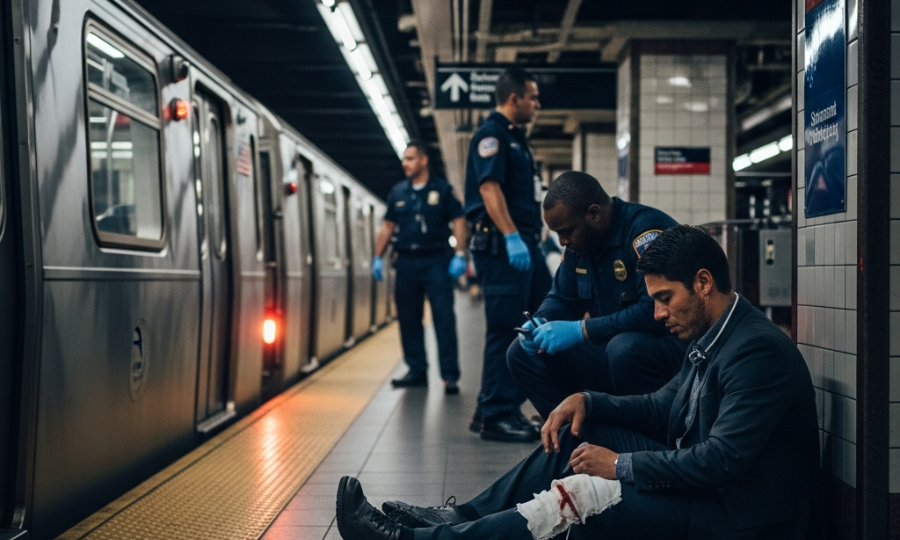
The rumble of the subway is a constant backdrop to life in the Bronx, a vital artery for millions of New Yorkers. Yet, beneath the city’s surface, these essential transit lines can become sites of serious accidents. When a subway incident leaves you injured, the path to justice can feel as complex as the subway map itself. Our Bronx personal injury lawyers have decades of experience helping accident victims navigate these challenging claims.
Key Takeaways
- You have a strict 90-day deadline to file a Notice of Claim against the MTA after a subway accident in New York, as required by General Municipal Law § 50-e.
- Common subway accidents include train strikes, which led to a notable number of people being struck and fatalities in 2023, and slips, trips, and falls, which account for a significant portion of customer accidents.
- An experienced Bronx personal injury lawyer is crucial for navigating complex MTA claims, ensuring deadlines are met, and thoroughly investigating negligence to secure fair compensation.
- After filing a Notice of Claim, you have one year and 90 days from the accident date to file a lawsuit against the MTA.
We understand the profound impact a sudden injury can have on your life. Medical bills pile up, lost wages create financial strain, and the physical and emotional recovery can be a long road. Our firm stands ready to guide you through the legal process with clear, confident language, ensuring you understand your rights every step of the way.
Understanding Subway Accidents in Our Borough
Subway accidents in the Bronx are not uncommon, ranging from platform falls to train-related incidents. These events can result in severe, life-altering injuries. In 2023, for instance, a notable number of individuals were struck by subway trains in New York City, and a portion of those incidents were fatal. This represented a significant increase since 2018.
Train strikes often lead to catastrophic outcomes, including death, amputation, or severe traumatic brain injury. A study published in the Journal of Forensic Science, which examined subway-related fatalities in New York City between January 2003 and May 2007, found that at least 76 out of 211 fatalities were unintentional, accounting for approximately 36% of the total. Another study focusing on traumatic amputation injuries from subway accidents at Bellevue Hospital between 1989 and 2003 noted that below-the-knee amputations were the most common type of injury.
However, not all subway accidents involve direct contact with a train. Slips, trips, and falls account for a substantial majority of customer accidents. Specifically, slips, trips, and falls account for a significant portion of all subway customer accidents. These incidents frequently occur on subway stairways, which can be steep, narrow, and, in many cases, over a century old.
Common causes of stairway falls include worn or broken treads, missing handrails, and overcrowding during rush hour. Such falls can lead to serious injuries, including broken bones, head injuries, and spinal injuries. Other factors contributing to platform incidents include medical emergencies, intoxication, and general overcrowding.
The Critical 90-Day Deadline for MTA Claims
When you suffer an injury on the subway, whether in the Bronx or elsewhere in New York City, you are likely dealing with a public authority: the Metropolitan Transportation Authority (MTA). Suing a government entity like the MTA is fundamentally different from pursuing a claim against a private individual or company. New York law imposes strict and often unforgiving deadlines.
Specifically, you have just 90 days from the date of your accident to file a formal document known as a Notice of Claim. This 90-day period is counted in calendar days, but extends to the next business day if day 90 falls on a weekend or holiday. Missing this crucial deadline can permanently bar you from seeking compensation, regardless of how severe your injuries are or how clear the MTA’s negligence may be.
This requirement stems from New York General Municipal Law § 50-e. The law mandates this notice to give the public corporation, in this case, the MTA, prompt notification of the claim. This allows the agency to investigate the incident, preserve evidence, and assess potential liability while the facts are still fresh. While this serves an administrative purpose, it often catches injured individuals off guard, especially when they are focused on recovery.
Even after a timely Notice of Claim, the legal process continues. You have one year and 90 days from the accident date to file a lawsuit against the MTA. This is a significantly shorter period than the standard three-year statute of limitations that applies to most personal injury cases against private parties in New York.
If the MTA requests it, you may also need to attend a 50-h hearing. This is a non-optional examination where you provide sworn testimony about the accident and your injuries. The MTA’s lawyers are highly experienced in these hearings, and your statements become part of the official record. Preparing for this hearing with an experienced accident attorney in the Bronx is essential to protect your rights.
Establishing Liability in Subway Accident Cases
To successfully pursue a claim against the MTA, you must prove that their negligence caused your injuries. Negligence means that the MTA, or one of its employees, failed to act with the reasonable care expected of a public transit operator, and this failure directly led to your accident. Common areas where MTA negligence might arise include:
- Poor Maintenance: This can involve worn or broken stairway treads, inadequate lighting in stations, malfunctioning escalators or elevators, or debris on platforms that creates a tripping hazard. Many NYC subway stations are over 120 years old, and many have not seen substantial renovation since their construction.
- Operator Error: Train operators have a duty to operate trains safely. Distracted driving, speeding, or failing to respond appropriately to hazards can lead to sudden stops, collisions, or other incidents.
- Defective Equipment: Mechanical failures in trains, such as faulty brakes or doors, can cause serious accidents. In such cases, the manufacturer of the defective part might also bear some liability.
- Inadequate Security: While the MTA has increased security measures, including installing security cameras in many subway cars and increasing police presence, incidents can still occur due to insufficient security.
- Overcrowding: During peak hours, overcrowding can lead to dangerous conditions, especially on platforms and stairways, where jostling can cause falls.
Our injury attorneys in the Bronx handle car, construction, and slip-and-fall cases, and we apply that same diligent approach to subway accident investigations. We gather evidence such as surveillance footage, maintenance records, accident reports, and witness statements. We also work with experts to reconstruct the accident and establish the chain of events that led to your injury. This comprehensive approach is vital in building a strong case against a powerful entity like the MTA.
Common Injuries and Your Right to Compensation
Subway accidents often result in severe and debilitating injuries. These can include traumatic brain injuries, spinal cord injuries, broken bones, severe lacerations, and even wrongful death. Public reports indicate that in 2022, a number of people were hit by MTA trains, resulting in a significant number of fatalities. These injuries often require extensive medical treatment, long-term rehabilitation, and can prevent victims from returning to work.
If you have been injured due to MTA negligence, you may be entitled to compensation for various damages. These include:
- Medical Expenses: This covers all past and future costs related to your treatment, including emergency care, hospital stays, surgeries, medications, physical therapy, and assistive devices.
- Lost Wages: If your injuries prevent you from working, you can seek compensation for lost income, both current and future earning capacity.
- Pain and Suffering: This accounts for the physical pain, emotional distress, and diminished quality of life caused by your injuries.
- Other Damages: Depending on the specifics of your case, you may also recover for property damage, loss of enjoyment of life, and other related losses.
The total amount of compensation will depend on the severity of your injuries, the impact on your life, and the strength of the evidence proving the MTA’s liability. The MTA handles a substantial number of personal injury claims annually. The NYC Comptroller’s Annual Claims Report covers NYC claims, not MTA aggregate payout history. This demonstrates that the MTA regularly faces such claims and provides compensation when liability is established.
What to Do After a Subway Accident
Taking immediate action after a subway accident is crucial to protecting your legal rights. Your priority should always be your health and safety, but if you are able, consider these steps:
- Seek Medical Attention Immediately: Even if you feel fine, some injuries may not be immediately apparent. A prompt medical examination creates an official record of your injuries, which is vital for any future claim.
- Report the Incident: Notify an MTA employee, the train operator, or the police about the accident. Obtain an incident report number if one is generated.
- Document the Scene: If it is safe to do so, take photos or videos of the accident location, any hazards, and your injuries. Note the subway car number, train line, direction of travel, and the specific station and time.
- Gather Witness Information: If anyone saw what happened, ask for their names and contact information. Their testimony can be invaluable.
- Do Not Give Recorded Statements: Do not provide any recorded statements to the MTA or their insurance adjusters without first consulting with an experienced Bronx car accident lawyer or personal injury attorney.
- Contact a Bronx Personal Injury Lawyer: The 90-day Notice of Claim deadline is extremely short. Contacting a lawyer immediately ensures that this critical step is handled correctly and on time.
How an Experienced Bronx Injury Lawyer Can Help
Navigating a subway accident claim against the MTA requires a deep understanding of New York’s complex personal injury laws and the specific rules governing claims against public authorities. Our firm brings that expertise to every case.
We will:
- Ensure Timely Filing: We will prepare and file your Notice of Claim within the strict 90-day deadline, preventing your case from being dismissed on a technicality.
- Conduct a Thorough Investigation: Our team will meticulously investigate the accident, gathering all necessary evidence, including surveillance footage, maintenance logs, and witness statements.
- Handle All Communications: We will manage all correspondence and negotiations with the MTA and their legal team, protecting you from tactics designed to minimize your claim.
- Represent You at Hearings: If a 50-h hearing is required, we will prepare you thoroughly and represent you to ensure your rights are protected.
- Accurately Assess Damages: We work with medical and financial experts to calculate the full extent of your damages, ensuring you seek fair compensation for all your losses.
- Fight for Your Rights in Court: While many cases settle out of court, we are prepared to take your case to trial if a fair settlement cannot be reached.
Dealing with the aftermath of a subway accident is overwhelming. You should focus on your recovery, not on battling a large government agency. Our commitment is to shoulder the legal burden, allowing you to concentrate on healing.
Choose the Best Bronx Injury Lawyer for Your Case
When your future hangs in the balance, choosing the right legal representation is paramount. We are deeply rooted in the Bronx community and possess an intimate understanding of the local legal landscape and the challenges faced by our neighbors.
Our approach is always empathetic and client-focused. We believe in clear communication, keeping you informed and empowered throughout the entire process. We fight tirelessly for the maximum compensation our clients deserve, holding negligent parties accountable for their actions.
If you or a loved one has been injured in a subway accident in the Bronx, do not delay. The clock starts ticking immediately after the incident. Protect your rights and ensure you have a strong advocate by your side. If you need an experienced Bronx accident lawyer, our firm is ready to fight for you.
Sources
- NYS Open Legislation | NYSenate.gov — N.Y. General Municipal Law Section 50-e: Ameliorating New York’s Notice of Claim Requirements
Related Reading
Frequently Asked Questions
What is the first step after a subway accident in the Bronx?
The most important first step is to seek immediate medical attention for your injuries, even if they seem minor. After ensuring your safety, report the incident to an MTA employee or police, and if possible, document the scene with photos and gather witness information. Then, contact a Bronx personal injury lawyer as soon as possible due to strict legal deadlines.
How long do I have to file a claim against the MTA for a subway injury?
You have a very strict deadline of 90 calendar days from the date of the accident to file a formal Notice of Claim with the MTA. This is a mandatory prerequisite under New York General Municipal Law § 50-e. Missing this deadline can result in the permanent loss of your right to pursue compensation.
What kind of compensation can I get for a subway accident injury?
If you are injured due to MTA negligence, you may be able to recover compensation for your medical expenses, including future treatment and rehabilitation. You can also seek damages for lost wages, both current and future, and for your pain and suffering. The specific amount depends on the severity of your injuries and the strength of your case.
Are subway accidents common in New York City?
Subway accidents do occur in New York City. For example, in 2023, 241 people were struck by subway trains, resulting in 97 fatalities. Additionally, slips, trips, and falls are a significant concern, accounting for 75% of all subway customer accidents. These incidents can lead to serious injuries, including broken bones, head injuries, and amputations.
This article was drafted with AI assistance. Please verify all claims and information for accuracy. The content is for informational purposes only and does not constitute professional advice.
Free Consultation
We want to hear about your case! Fill in the form to speak to a Bronx personal injury attorney now!
Follow us for legal tips and case results:
