
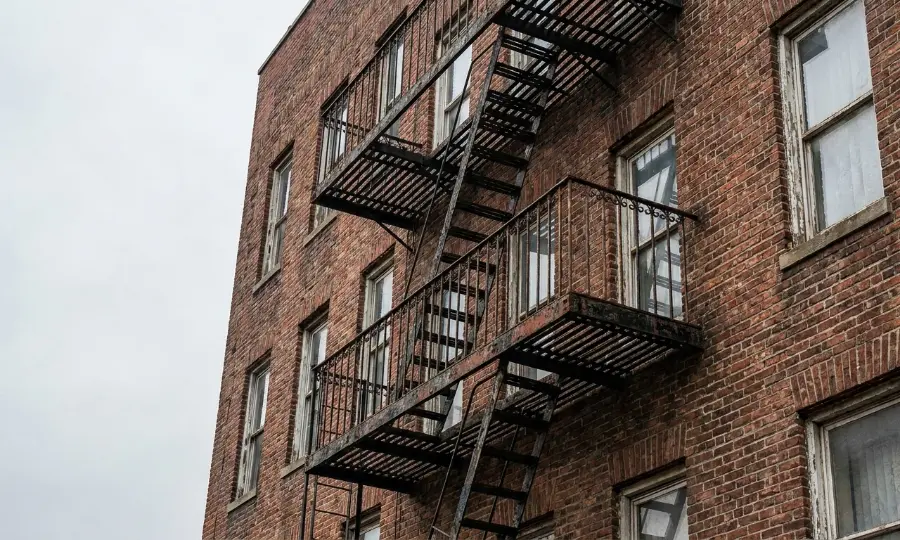
Historic apartment buildings across the Bronx feature exterior iron fire escapes designed to provide an essential secondary emergency route. Unfortunately, many landlords fail to maintain these aging structures. Dilapidated ironwork, severe rust, frozen drop ladders, and illegal clutter turn these life-saving escapes into deadly hazards. Our Bronx personal injury lawyers have decades of experience helping accident victims seek justice after preventable building disasters.
Key Takeaways
- Under New York Multiple Dwelling Law Section 78, building owners bear a non-delegable duty to maintain every part of a multiple dwelling in safe repair.
- The NYC Facade Inspection and Safety Program mandates structural reviews every five years for buildings taller than six stories, with Cycle 10 running from February 21, 2025 through February 21, 2029.
- In Klupchak v. 518 Greenwich Realty LLC, New York County Supreme Court recorded a $39.5 million jury verdict ($29 million recovery) for catastrophic injuries caused by an illegal, unguarded fire escape.
- Under New York CPLR Section 1411 comparative negligence rules, injured tenants may still recover damages even if partial platform clutter contributed to an accident.
When fire breaks out in a multi-story residential building, tenants have only seconds to escape. Consequently, a rusted step tread that snaps or a jammed release mechanism can cause life-altering falls and devastating burn injuries. Under New York State and New York City housing laws, property owners bear strict legal obligations to keep fire escapes safe, functional, and completely unobstructed.
Landlord Legal Obligations Under New York Multiple Dwelling Law
New York law imposes strict duties on landlords regarding residential safety. Specifically, Under New York Multiple Dwelling Law Section 78, building owners bear a non-delegable duty to maintain every part of a multiple dwelling in safe repair. This duty covers exterior fire escapes, drop ladders, structural brackets, and building anchorages. Landlords cannot escape liability by blaming property managers or independent repair contractors.
Also, New York City Administrative Code Section 27-2014 and the NYC Housing Maintenance Code mandate that fire escape balconies, stairs, and drop ladders remain clear at all times. The law requires landlords to scrape, paint, and protect all structural metal against rust. In addition, building owners must maintain all counterbalanced drop ladders in immediate working order so they deploy instantly under emergency weight.
The Importance of NYC Facade and Fire Escape Inspections
To prevent catastrophic failures, New York City enforces rigorous exterior inspection standards. Under the Facade Inspection and Safety Program, codified at 1 RCNY Section 103-04 and New York City Administrative Code Section 28-302.1, owners of buildings taller than six stories must hire a Qualified Exterior Wall Inspector. Qualified professionals must perform critical examinations of exterior walls and appurtenances every five years, with close-up physical inspection of representative portions. The Department of Buildings schedules Cycle 10 inspections to run from February 21, 2025 through February 21, 2029.
During these mandated reviews, inspectors document structural degradation. Common red flags include rust rot around structural bolts, cracked masonry anchors, loose railings, and broken counterweights. However, many negligent property owners delay necessary structural repairs to save money. When landlords ignore known safety defects, innocent tenants pay the price during unexpected fires.
Severe Fall and Burn Injuries From Defective Fire Escapes
A structural failure during an evacuation can inflict devastating physical injuries. In many cases, iron step treads corrode from within, giving way under a tenant’s weight and causing a multi-story drop to concrete alleyways. Victims frequently sustain traumatic brain injuries, spinal cord damage, crushed vertebrae, multiple bone fractures, and internal organ trauma.
Similarly, blocked egress routes create deadly entrapment situations. When tenants cannot lower a jammed drop ladder or squeeze past illegal platform clutter, they get trapped inside thick toxic smoke. This entrapment leads to permanent respiratory airway damage, severe thermal burns, and carbon monoxide poisoning. Our injury attorneys in the Bronx handle car, construction, and slip-and-fall cases, as well as severe fire escape fall and burn claims.
Establishing Landlord Liability and Proving Notice
Winning a personal injury lawsuit against a negligent landlord requires demonstrating that the owner breached their legal duty of care. In the landmark case Juarez v. Wavecrest Management Team Ltd., Juarez v. Wavecrest established notice requirements specifically for lead paint hazards under NYC Local Law 1, not general property defect claims. Alternatively, plaintiffs can demonstrate a statutory violation of Multiple Dwelling Law Section 53.
Constructive notice exists when a hazard has been visible and apparent for a sufficient duration before the incident. For instance, extensive rust staining, loose railing anchors, or past 311 complaints show the landlord should have discovered and fixed the problem. Our legal team works quickly after an accident to secure physical iron fragments, obtain maintenance logs, review past 311 complaints, and retain structural engineering experts.
Significant Precedents in New York Fire Safety Litigation
New York courts have repeatedly held negligent property owners liable for dangerous fire escapes. For example, in New York County Supreme Court, the case Klupchak v. 518 Greenwich Realty LLC resulted in a 39.5 million dollar jury verdict with a 29 million dollar high-low recovery for an NYU student paralyzed after falling through an illegal, improperly guarded fire escape opening. This verdict underscores the severe legal accountability building owners face when failing to maintain safe emergency egress.
Tragic safety failures have also affected our local Bronx community. In Bronx Supreme Court, the complex litigation Reyes, et al. v. Bronx Park Phase III Preservation LLC highlighted catastrophic wrongful death and burn claims following the historic Twin Parks North West residential fire. The lawsuit detailed how compromised evacuation corridors, failed self-closing doors, and maintenance oversights contributed to severe smoke inhalation and loss of life across multiple residential floors.
Addressing Tenant Obstructions and Comparative Fault
Defense insurance companies often attempt to deflect responsibility onto injured residents. Landlords may argue that a resident placed flowerpots, air conditioning brackets, or storage bins on the iron platform. In New York, personal injury claims follow pure comparative negligence rules under New York CPLR Section 1411.
Under New York’s comparative negligence framework, juries apportion fault among parties, though CPLR 1411 itself only addresses reducing claimant’s damages. However, any minor tenant contribution does not bar financial recovery. Building owners remain primarily responsible for ensuring structural integrity and clearing dangerous encumbrances during required routine inspections. If a landlord lets hazardous rust deteriorate structural load capacities, the owner remains liable when the frame buckles.
Critical Steps to Take After a Fire Escape Accident
If you or a family member suffered injuries on a damaged fire escape in the Bronx, taking immediate action is essential to protect your legal rights:
- Seek emergency medical care immediately and document all physical trauma with physicians.
- Take clear photographs and videos of the rusted iron, broken ladder mechanisms, blocked pathways, and surrounding masonry.
- Collect contact information from neighbors, witnesses, and responding FDNY firefighters.
- Request a copy of the official FDNY incident report and any municipal building inspection filings.
- Avoid giving recorded statements to the landlord’s insurance adjusters before consulting counsel.
If you need an experienced Bronx accident lawyer, our firm is ready to fight for you. We investigate the maintenance history of the property, determine every liable party, and advocate tirelessly for your medical expenses, lost income, and long-term recovery.
Sources
- New York State Legislature, New York Multiple Dwelling Law Sections 53 and 78
- New York City Department of Buildings, Facade Inspection & Safety Program (FISP) Rules, 1 RCNY Section 103-04
- New York Court of Appeals, Juarez v. Wavecrest Management Team Ltd., 88 N.Y.2d 628
- Bronx County Supreme Court, Reyes v. Bronx Park Phase III Preservation LLC
This article was drafted with AI assistance. Please verify all claims and information for accuracy. The content is for informational purposes only and does not constitute professional advice.
Free Consultation
We want to hear about your case! Fill in the form to speak to a Bronx personal injury attorney now!
Follow us for legal tips and case results:
